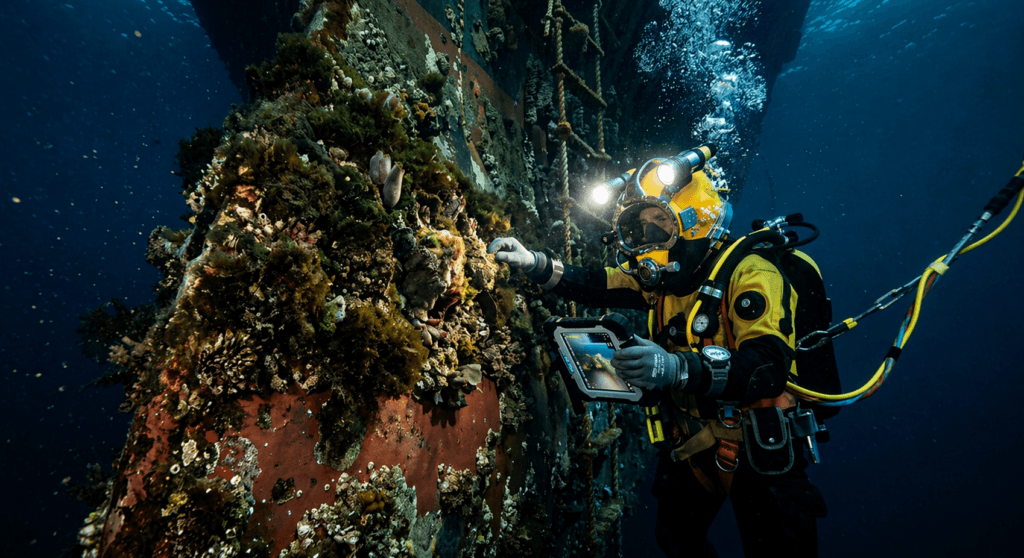
Coral growth in submerged structures and ship hulls can influence performance greatly, hike fuel consumption, and hasten corrosion. In the maritime sector, the fight against biofouling (the growth of microorganisms, plants, and animals) on wet surfaces is never-ending. Biofouling may cause enormous operational inefficiencies and soaring costs without adequate monitoring. Underwater anti-fouling marine growth analysis is one of the surest solutions to determine the performance of the coating, track the marine growth, and ensure optimal efficiency.
With an analysis that is no longer based on mere visual checks, but rather on the data, vessel owners and offshore operators will be able to see how their assets are interacting with the marine environment. This guide discusses the methodologies, technologies, and strategic benefits of having a strict fouling analysis program.
What is Marine Growth Analysis?
Marine growth analysis is the assessment of marine organisms like algae, barnacles, tube worms, and biofilms on underwater surfaces. It is not simply a tally of the number of organisms present, but a technical evaluation of the character, concentration, and tenacity of the growth. Marine growth analysis services classify fouling as soft (algae/ biofilm ) and hard (barnacles/ mussels ) to identify the exact effect on the structure.
This is done to ascertain the degree of fouling and its effect on the structural performance. In the case of offshore platforms, the growth is so high that it adds to the hydrodynamic loading (the force of waves against the structure), whereas in the case of ships, it adds to the skin friction (the amount of force needed to keep the ship moving) and consequently causes the engine to work harder. The initial process in a proactive maintenance strategy is regular underwater fouling inspection.
What is Anti-Fouling and Why It Matters
Anti-fouling is the term used to describe the protective coatings on the surfaces of the underwater structures to inhibit the settlement of the marine organisms. In the past, these treatments were based on biocides to kill the larvae settling into the coating, although current antifouling coating testing frequently examines so-called fouling-release coatings that make the surface highly slippery, preventing organism settlement.
These coatings are highly significant in keeping the vessels in operation and minimizing the maintenance needs. They also play an important role as a corrosion prevention coating, protecting the underlying steel against the oxygen-saturated and salt-laden environment that facilitates rust. Failure of the anti-fouling will be followed by a loss of structural integrity of the asset.
How Underwater Anti-Fouling Analysis Works
This is done through a multi-step process of collecting and interpreting data.
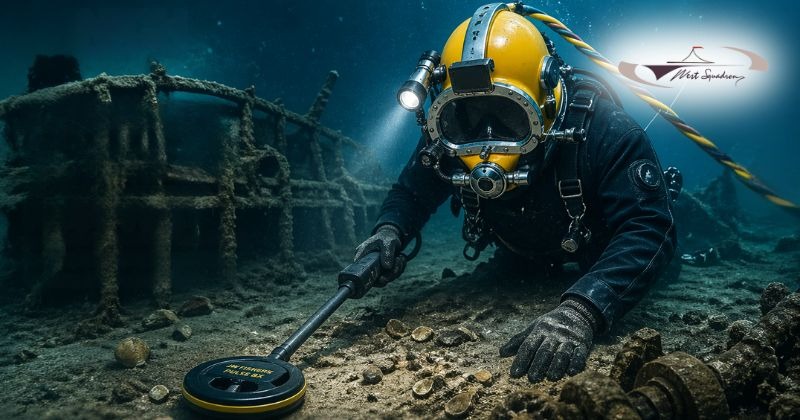
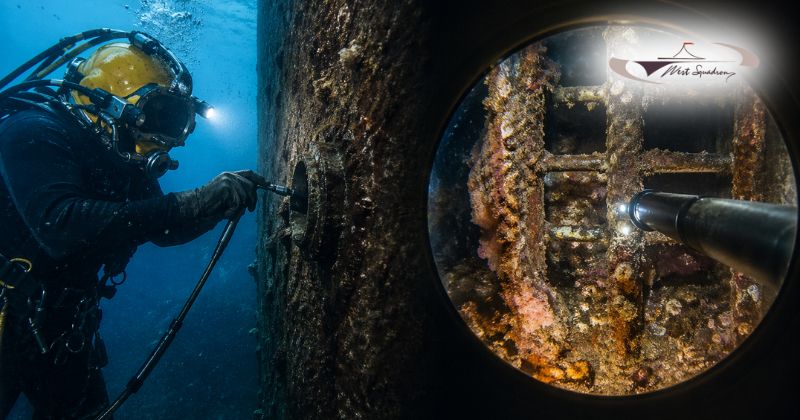
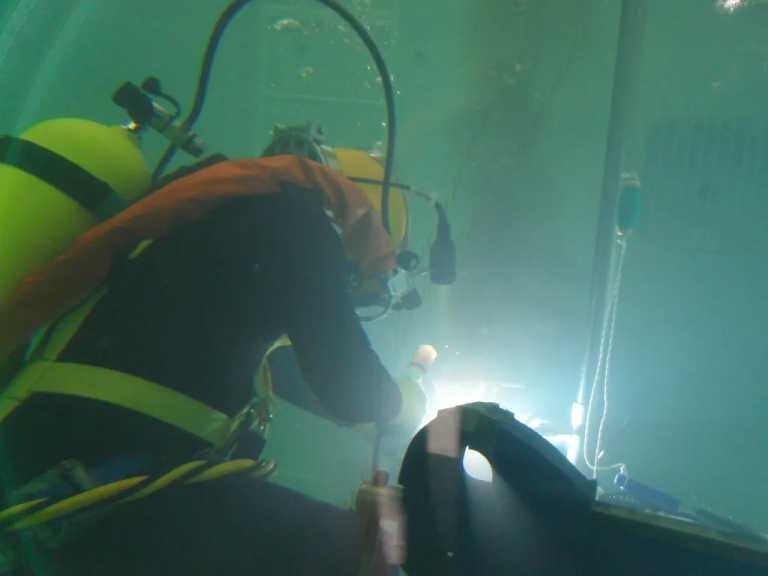
- Visual Inspections: Visual inspection of the whole underwater area by highly skilled divers or specialized ROV marine inspection units.
- High-Resolution Imaging: Macro-photographing of particular parts of the test to identify the performance of various parts in the coating.
- Data Analysis: The comparison of the hull’s present condition to that in the past records to determine the growth rate.
- Underwater Imaging and Analysis: To determine the thickness of the remaining anti-foulant layers, they used ultrasonic or laser-based instruments.
The results are used to decide how much cleaning or maintenance is required, and hence, the operators will only have to arrange the hull grooming sessions when they are really required, and this will lengthen the life of the costly coating.
Applications of Marine Growth Analysis
The service is a high-conversion requirement by various industries worldwide:
- Ship Hull Inspection Services: The optimization of the work of container ships, tankers, and cruise liners.
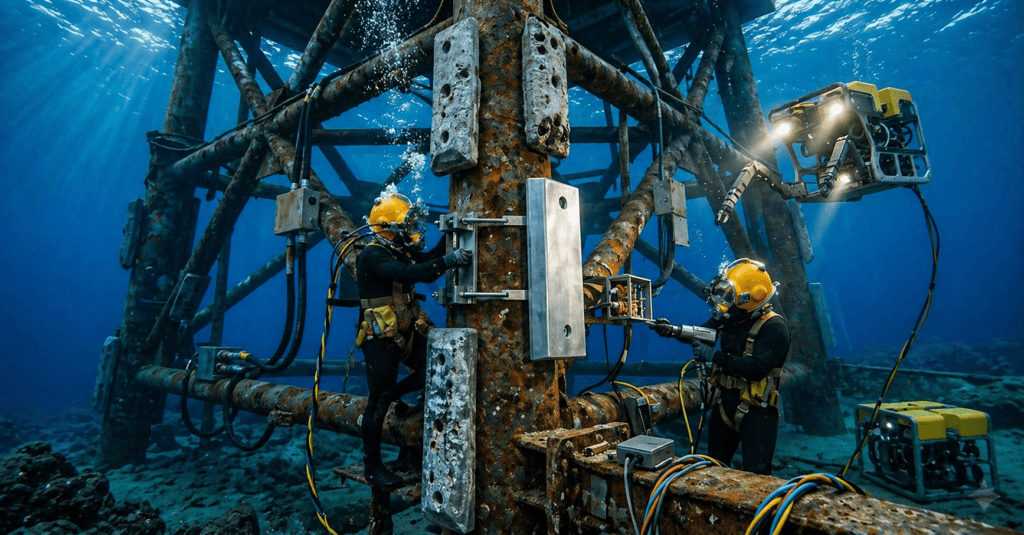
- Offshore Platform Inspection: Checking the legs and bracing of oil rigs and wind turbines to check on the safety of the wave loads.
- Subsea Pipelines: This is to ensure that there is no interference with the growth of thermal regulation and cathodic protection of the subsea lines.
- Ports and Harbors: The structural soundness of steel pilings and concrete berths.
Impact of Marine Growth on Performance
The correlation between biofouling and ROI is direct. Sea plants cause drag to ships, which results in a very high fuel consumption and slowness. It has been demonstrated that even a thin layer of biofilm (called slime) can add to the fuel consumption by up to 10 percent, and the extensive growth of calcareous (barnacles) by more than 40 percent.
Additionally, the marine vessels that reduce drag are more environmentally friendly because they produce less greenhouse gas. In addition to fuel, fouling may cause coatings and accelerate corrosion by forming localized “pitting” conditions under the organisms, and have a profound impact on the life of the asset.
Benefits of Anti-Fouling Marine Growth Analysis
Professional marine coating performance analysis ROI is:
- Improvement of Fuel Efficiency: Maintaining the hull smooth, so as to reduce the amount of energy needed to propel.
- Hull Cleaning Optimization: Prevention of abrasive cleaning that is not required after the antifouling paint has been applied, and it is not necessary to remove the active layers.
- Extended Asset Life: Coating holidays or failures can be identified before corrosion develops.
- Invasive Species Management: Assistance to vessels to adhere to international standards concerning the transport of non-native species across the oceans.
Challenges in Underwater Inspection
Even with the technology, subsea inspection services encounter major challenges:
- Lack of Visibility: The visibility in ports in the brown water might be low, and in such cases, divers and cameras might not have a clear view of growth, and thus, they have to use special acoustic cameras.
- Water Currents: Rapid water flows complicate the use of ROVs to hold a consistent position to support high-res imaging.
- Vessel Geometry: The growth can be most aggressive in the niche areas, such as sea chests, bow thrusters, and rudder pintels, where it is possible to reach.
Safety and Compliance in Marine Inspections
The pillars of the marine survey company are safety and environmental stewardship.
- Environmental Regulations: To ensure that the inspection process does not discharge any harmful biocides to the local ecosystem.
- International Standards: Following IMO (International Maritime Organization) guidelines on biofouling management.
- Diver Safety: Special rules regarding working in the threat of ship suction or in limited harbor areas.
- Keywords: sea survey services, marine offshore maintenance services.
How to Choose the Right Service Provider
The choice of an underwater inspection company is one of the decisions that affects your long-term operation costs.
- High Technology: Do they have 4K imaging and automated ROVs to produce repeatable and quality data?
- Biological Knowledge: Do they know individual species of growth to prescribe the most useful type of cleaning or coating?
- Thorough Reporting: Are they easy to understand and act on, or merely a stack of unprocessed video?
Select specialists to conduct proper marine growth analysis and antifouling inspection.
Cost of Underwater Anti-Fouling Analysis
The price of marine inspection is usually dependent on vessel size (DWT) or the offshore structure complexity. Although inspection incurs an initial cost, preventive analysis saves on maintenance costs, as it determines the precise time when a light clean can be performed instead of a costly hard scrub or untimely dry-docking.
Hint: Fuel savings alone can frequently justify regular analysis on one trip.
Future Trends in Marine Growth Monitoring
The industry is shifting towards high-tech marine inspection:
- AI-Powered Analysis: Machine learning capable of computing the proportion of coverage and detecting fouling species based on video frames automatically.
- Automated ROVs: These are capable of crawling a hull without any human intervention and are the best solution to a 100 percent audit of the surface with zero risk to human life.
- Real-Time Sensors: IoT sensors that are installed on the coating and signal the operators about the initial signs of biofilm attachment.
Conclusion: Improve Efficiency with Smart Marine Analysis
Underwater anti-fouling marine growth analysis is critical in ensuring vessel efficiency, cost reduction, and long-term performance. With the current trend of increasing fuel costs and tough environmental regulations, monitoring and control of biofouling is a key competitive edge. By having advanced inspection techniques, companies will be able to streamline their maintenance plans, secure their submerged property, and enhance operational stability in the long term.
We provide professional contact underwater antifouling and marine growth analysis.
Frequently Asked Questions (FAQ)
Q1. At what rate should the hull of a ship be examined to grow?
Ans: The majority of the operators conduct a visual inspection at least 6 to 12 months, or more frequently, in case the vessel has been idling in the warm, tropical waters where the rates of growth are higher.
Q2. Are ROVs an alternative to divers in anti-fouling inspections?
Ans: In many cases, yes. The new ROV marine inspection devices have high-resolution data and can be used in an environment that may be unsafe for human divers, but physical sampling still needs divers.
Q3.What is the Slime Layer, and is it significant or not?
Ans: Yes. The initial step of fouling is the slime layer (biofilm). Although seemingly insignificant, it can cause a fuel consumption that is up to 10 percent higher because of the microscopic turbulence it forms.
Q4. Is cleaning necessarily beneficial to the anti-fouling coating?
Ans: Not necessarily. The active biocide layer of a coating can be washed off by aggressive cleaning. The use of marine growth analysis assists you in deciding the most effective cleaning method that is gentle in preserving the paint.