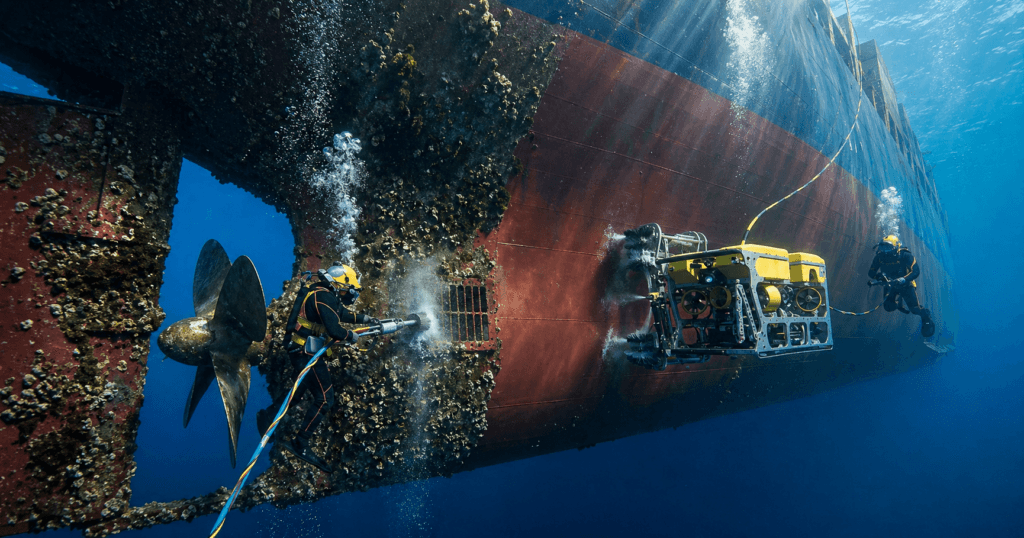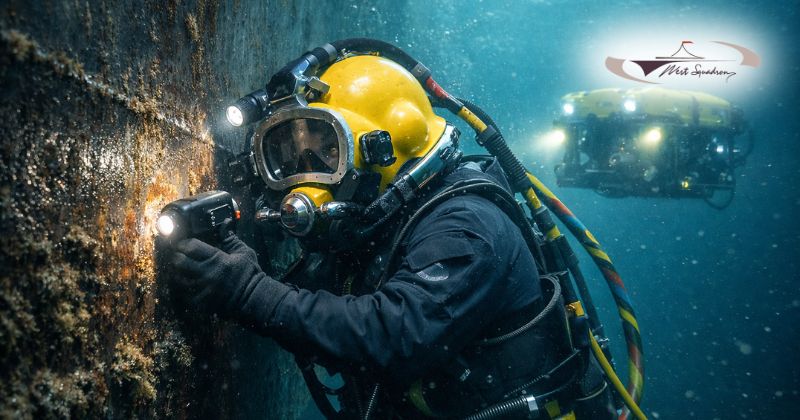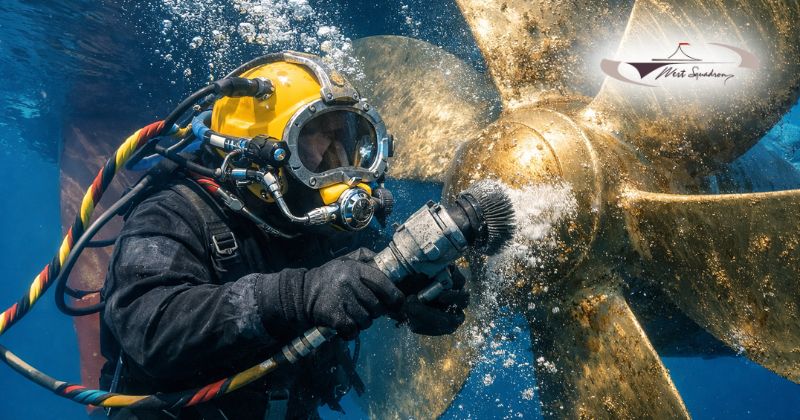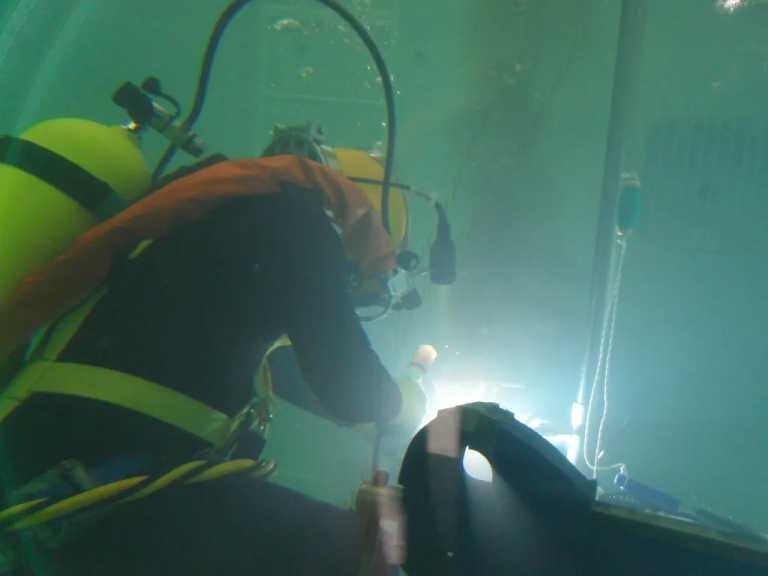
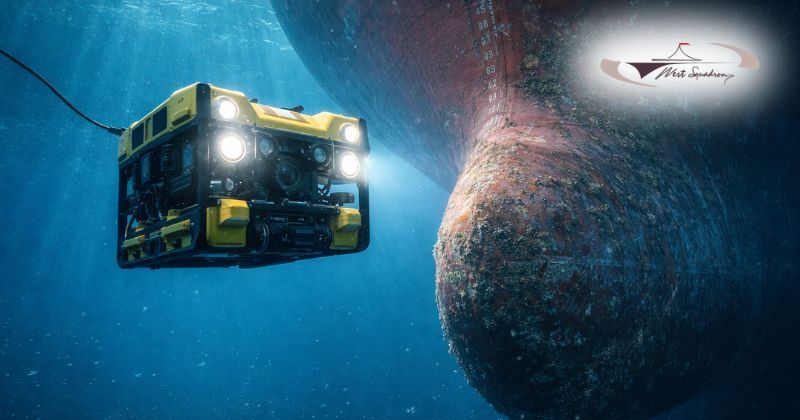
Contemporary shipping activities rely on ships that are safe, efficient, and operational over a long period of time. The underwater portion of a ship is constantly in the presence of seawater, so corrosion, marine growth, coatings wear, and impact damage, and other types of defects may occur without being noticeable above the water line. Regular underwater examination is thus significant in the preventative maintenance of the vessels.
Underwater Hull inspection by ROV offers a technology based solution to marine operators to inspect the submerged hull surface and minimize the requirement for human personnel to access the difficult underwater conditions. With high-resolution cameras, lighting systems, and specialized sensors, remotely operated vehicles can provide valuable visual information for maintenance and condition assessment.
What Is an ROV Hull Inspection?
A remotely operated vehicle (ROV hull inspection is an inspection of the underwater sections of a vessel that is performed using a remotely operated vehicle operated at the surface level. The car is normally fitted with cameras, lights, thrusters, and other inspection devices which enable the operators to move around the hull.
The ROV is able to record video and photography of the hull plating, rudder, propeller, sea chest, stern area, anodes, and other submerged parts during an inspection.
This is especially applicable when a boat requires underwater inspection without necessarily going into a dry dock.
Why Are Underwater Hull Inspections Important?
The underwater condition of a vessel directly impacts on safety, fuel consumption, propulsion performance, and the cost of maintenance. Minor flaws that go unnoticed can be transformed into much greater issues in the long run.
An organized inspection may help to locate:
- Coating and corrosion.
- Marine growth and fouling.
- Visible structural damage or cracks.
- Abnormalities of propeller and rudder.
- Destroyed or worn-out anodes.
- Blocked sea chests
- Areas in need of additional research.
The prompt diagnosis provides vessel owners and technical teams with a time frame during which they can plan how to correct the minor condition before it turns into a costly repair.
How ROV Technology Improves Underwater Inspection
Conventional surveys in water bodies might involve using commercial divers to survey the submerged regions. Although diver-based inspection is still necessary in most operations, ROV technology offers an alternative way of visual inspection.
Some of the benefits of modern ROV Hull Inspection Services include: minimized exposure of divers, quick deployment, video recording, and better access to some underwater structures.
The vehicle can be operated by the operator on the surface, and live camera footage can be monitored. This enables the inspection team to look into certain areas and document findings to be reviewed later.
The technology is particularly applicable in cases where the visibility, water conditions, vessel form, or other operational conditions complicate the traditional inspection.
Remote Underwater Inspection for Condition Monitoring
Remote Underwater Inspection enables shipowners and technical managers to gather visual data without having to fully depend on physical access by divers.
Recording video may enter into the history of the vessel maintenance, enabling teams to compare the conditions between various inspection intervals. It is thus easier to monitor changes in coating condition, fouling levels, corrosion, or component condition.
Nevertheless, ROV inspection is to be viewed as a component of a larger inspection scheme as opposed to being a universal substitute to diving. Certain circumstances involve on-the-job testing, measurements, cleaning, or maintenance by trained underwater workers.
What Does an Underwater Vessel Inspection Cover?
The extent of an Underwater Vessel Inspection varies based on the vessel, the purpose of the inspection, and the requirements involved.
The submerged hull, rudder, propeller, stern area, grilles to sea chest, anodes, and other available underwater parts might be examined in a typical visual analysis.
In certain technical inquiries, other equipment or techniques might be necessary. An example of this is the ultrasonic thickness measurement that can be used to determine the thickness of the material suspected of corrosion or structural damage.
The results of the inspection can be subsequently used to justify a larger scale Hull Condition Assessment, and assist technical teams to identify the need to perform additional inspection or maintenance.
ROV Inspections and Vessel Maintenance Planning
The most useful inspection data is that which can be used to make informed decisions with regard to maintenance. The survey data gathered by an ROV can assist the vessel managers to prioritize the repairs, track the degradation, and design future underwater operations.
As an example, an inspection can reveal excessive marine growth that needs to be cleaned, an anode that needs replacement, or evident coating loss that needs additional evaluation.
The combination of inspection outcomes and Vessel Maintenance Services may assist the operator in shifting to more proactive, condition-based maintenance rather than reactive maintenance.
Benefits for Vessel Owners and Operators
An underwater inspection program that incorporates ROV technology may yield a number of advantages.
Better Documentation
Digital video and photographic data can be helpful evidence of the conditions underwater and can be used to support maintenance documents.
Reduced Operational Disruption
In some cases, when it suits, underwater inspection may be conducted when a vessel is still on the water, and this will help in minimizing unnecessary movements or scheduling disruptions.
Improved Maintenance Decisions
Extensive underwater data helps technical teams to formulate areas that need to be worked on and work to be prioritized based on the true vessel condition.
Enhanced Safety
Remote inspection will minimize the necessity to expose the divers to some underwater conditions, especially in the initial visual inspection.
Frequently Asked Questions
Q1. What is the application of ROV in underwater hull inspection?
Ans: ROV is a method of inspecting submerged structures of vessels remotely by cameras, lighting, and other instruments. It is capable of obtaining live and recorded images of parts underwater.
Q2. Is a dry-dock necessary to inspect a ship using an ROV?
Ans: Under appropriate conditions, the ROV will be able to survey underwater regions when the boat is still on the water. The level of the inspection to meet a specific survey or regulatory requirement is determined by the classification and regulatory standards in place.
Q3. Is an ROV better than a commercial diver?
Ans: No one of the methods is superior. Remote visual inspection and documentation are best done with ROVs, and hands-on inspection, measurements, cleaning, and repair tasks are best done with divers to provide direct access to the work.
Q4. What is an ROV able to sense on the hull of a ship?
Ans: ROV can detect observable corrosion, coating wear, marine growth, structural anomalies, damaged parts, anode condition, and other observable underwater anomalies.
Q5. What should be the frequency of underwater hull inspections?
Ans: The frequency of inspections varies with the type of vessel, the terms of operation, the requirements of the class, the history of maintenance, and the objectives of the survey. An inspection plan must be made depending on the needs of the vessel.
Conclusion
Technology is transforming the manner in which marine operators are tracking and managing underwater resources. Underwater Hull inspection by ROV offers a viable way of gathering detailed visual data and assists in minimizing the needless exposure to adverse underwater environments.
This technology can be combined with ROV Hull Inspection Services, commercial diving know-how, condition surveillance, and Vessel Maintenance Services in order to make safer and more informed maintenance decisions. To shipowners and fleet managers, remote inspection with professional underwater knowledge is an even smarter solution to keeping track of the hull condition, detecting possible issues early, and staying reliable of the vessel during its operating cycle.
Related services
ROV hull inspection in Singapore — faster, safer, class-ready
ROV-based underwater hull inspection in Singapore covers the entire hull, propeller, rudder, sea chests and coating condition without deploying a diver. HD video, sonar, real-time streaming and structured recording make ROV surveys ideal for UWILD Singapore support and pre-drydock condition assessment.
When ROV is the right tool
- Class-approval / UWILD survey packages
- Pre-charter / pre-purchase hull condition
- Post-incident damage survey
- Deep-draft vessels or restricted diver access
- Continuous coating & biofouling monitoring