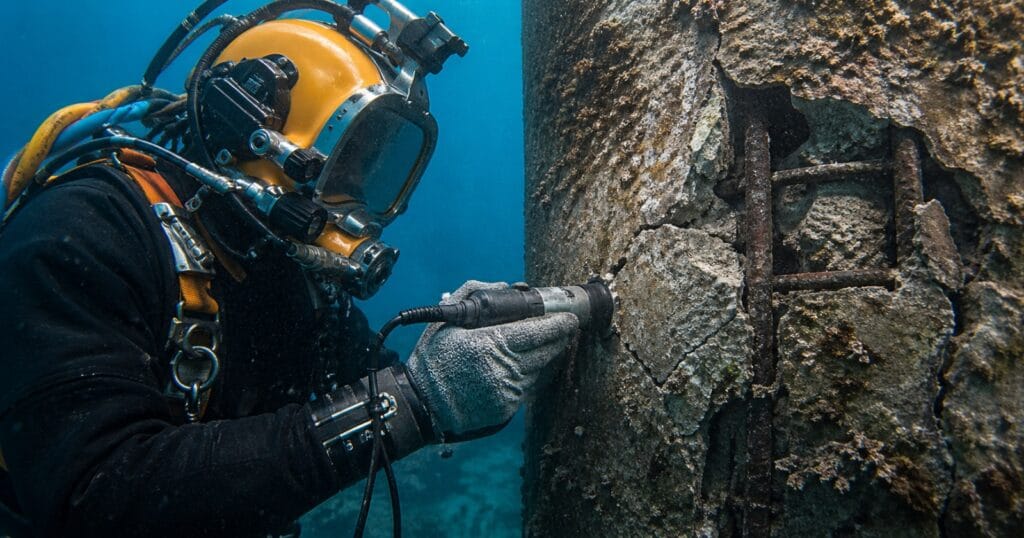
Introduction
Marine piles are concealed bases of numerous coastal and offshore structures that provide the foundation of bridges, jetties, wharves, ports, offshore platforms, and marine terminals. These structures are easily eroded over time through constant contact with seawater, tidal action, ship collision, corrosion, and marine life without leaving any trace above the water level. Unnoticed, small anomalies can progress to significant structural malfunctions leading to expensive maintenance, downtimes, and safety hazards.
Regular underwater pile inspection helps marine engineers to detect signs of subtle deterioration before they turn to be critical. Underwater inspections are performed using experienced commercial divers, remotely operated vehicles (ROVs), and high-tech non-destructive testing (NDT) equipment, which allows accurate evaluation of the condition of piles without disruption of regular operations. This manual outlines the working principle of underwater inspections of piles, the advantages, methods of inspection, and some of the best practices in the industry.
What Is Underwater Pile Inspection?
Underwater pile inspection refers to the inspection of submerged structural piles to assess their condition, stability, and structural integrity. The inspection is aimed at detecting defects due to corrosion, marine growth, scour, cracking, and impact damage or material deterioration.
Professional Marine Pile Inspection Services are normally done on:
- Bridge foundations
- Port structures
- Jetties
- Wharves
- Offshore platforms
- Dolphins
- Mooring structures
- Coastal protection systems
The inspection results assist engineers in laying emphasis on maintenance, repair schedules, and regulatory work.
Why Regular Pile Inspections Are Essential
Marine structures are constantly subjected to severe environmental conditions that hasten structural degradation.
Some of the common causes of underwater pile damage are:
- Corrosion
- Chloride attack
- Marine biofouling
- Scour around foundations
- Impact from vessels
- Fatigue cracking
- Concrete deterioration
- Steel section loss
These issues are easily identified by performing routine inspections and minimizing the risk of structural failure and prolonging the useful life of the assets.
How Underwater Structural Inspection Is Performed
Professional Underwater Structural Inspection is a systematic procedure that will guarantee dependable and precise findings.
1. Pre-Inspection Planning
Prior to deployment, engineers look at:
- Structural drawings
- Previous inspection reports
- Environmental conditions
- Tidal information
- Inspection objectives
With adequate planning, all the important structural aspects are covered.
2. Visual Underwater Examination
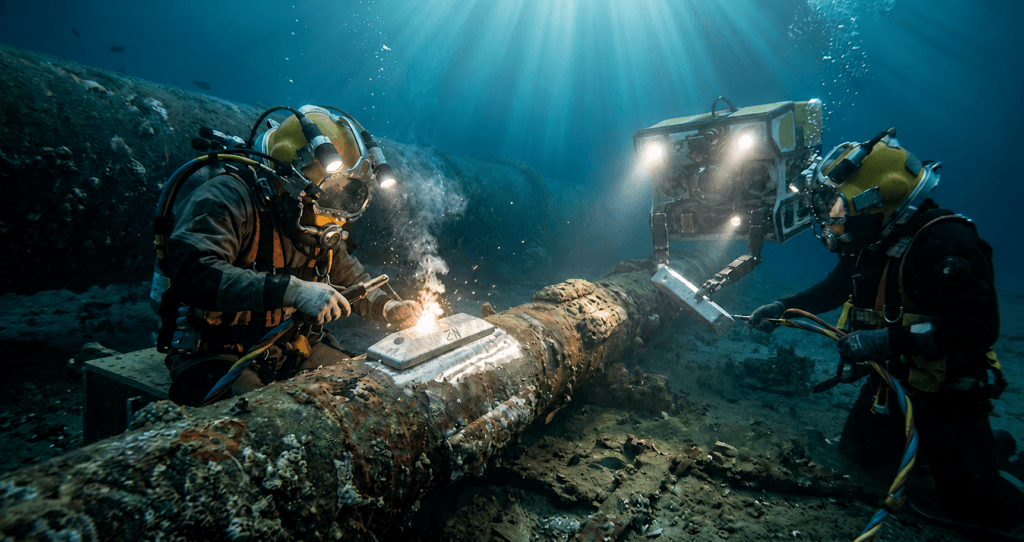
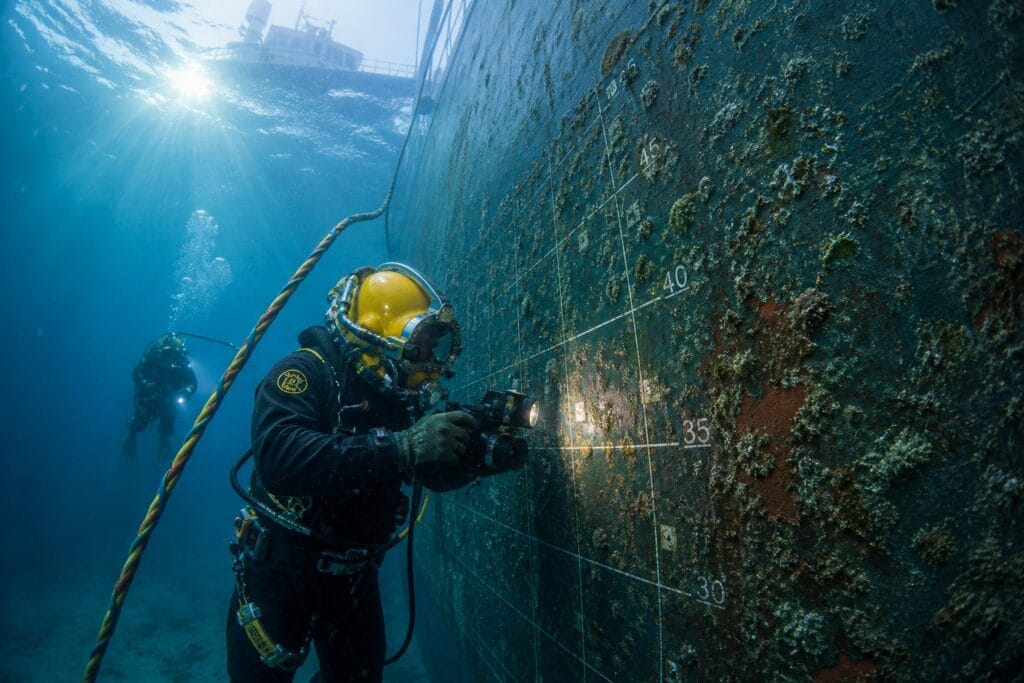
Certified commercial divers will carry out a preliminary visual examination to determine:
- Surface condition
- Marine growth
- Corrosion
- Cracks
- Spalling
- Deformation
- Exposed reinforcement
- Structural movement
High-definition underwater cameras are used to capture the state of each pile to be evaluated by engineers.
3. Non-Destructive Testing
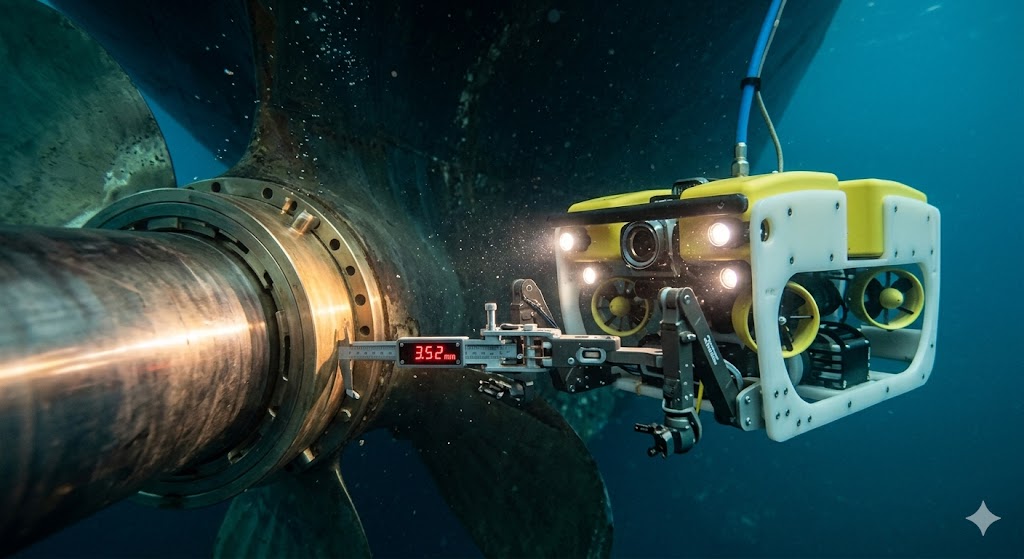
When necessary, divers apply ultrasonic thickness gauges or eddy current testing, hammer sounding, or other NDT techniques, which do not harm the structure, to determine the internal condition.
These methods give precise data regarding the loss of materials, concealed corrosion, and integrity of the structure.
4. Inspection Reporting
Inspection teams make full reports with:
- Underwater photographs
- Video recordings
- Defect mapping
- Measurement data
- Engineering observations
- Repair recommendations
Maintenance planning and regulatory inspection are supported by detailed documentation.
Applications of Offshore and Bridge Pile Inspections
In many areas of the marine industry, professional underwater inspections are employed.
Common applications include:
- Infrastructure, port and harbor.
- Offshore oil and gas platforms.
- Bridge foundations
- Marine terminals
- Ferry terminals
- Coastal defense structures
- Industrial jetties
- Renewable energy facilities
Regular Bridge Pile Inspection assists transportation authorities in maintaining structural safety and reducing service interruptions.
Equally, the Offshore Pile Inspection helps in sustaining the integrity of offshore platforms, subsea structures, and the marine energy facilities that are operating under harsh conditions.
Benefits of Commercial Diving Inspection Services
Professional Commercial Diving Inspection Services have a number of operational benefits.
Early Damage Detection
Regular life checks detect degradation even before the structural faults are serious or necessitate costly emergency reinforcements.
Reduced Maintenance Costs
Condition-based maintenance enables the operators to focus on repairs according to actual inspection data as opposed to fixed maintenance schedules.
Improved Safety
Early detection of structural vulnerabilities minimizes the risks to people, ships, and essential infrastructure.
Regulatory Compliance
Inspection reports help the owners to comply with the classification society, engineering, and local regulatory requirements.
Best Practices for Effective Pile Inspections
Marine operators are advised to implement a number of best practices in order to maximize both short- and long-term asset performance as well as inspection quality.
Establish Routine Inspection Programs
The inspection periods should take into consideration:
- Structure age
- Environmental exposure
- Water depth
- Vessel traffic
- Structural loading
- Previous inspection findings
Regular check-ups are used to determine the trends of deterioration over time.
Combine Visual and Instrument-Based Inspections
The best inspection programs incorporate:
- Visual inspections
- NDT testing
- Thickness measurements
- Scour assessments
- Marine growth evaluations
- Structural movement monitoring
A multiplicity of inspection methods will give a more inclusive picture of structural condition.
Work with Experienced Marine Inspection Specialists
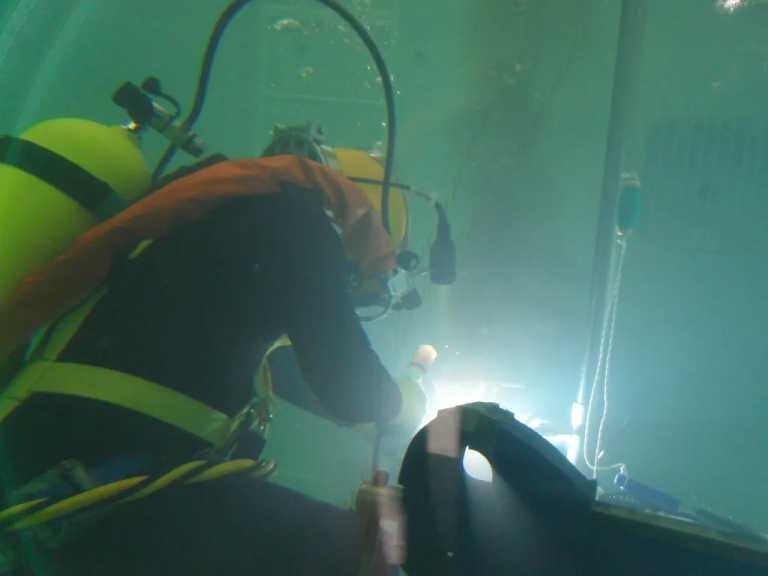
Inspections are carried out by certified commercial divers and marine engineers in a safe, accurate manner and following accepted engineering practices.
Emerging Technologies in Underwater Pile Inspection
The process of technological innovation is advancing underwater inspection capabilities.
In current inspection programs, there is growing use of:
- ROV-assisted inspections
- 3D underwater mapping
- High-definition video imaging
- Digital defect mapping
- AI-assisted condition analysis
- Cloud-based inspection reporting
The technologies enhance the accuracy of inspections as well as enable predictive maintenance and long-term management of infrastructure.
Frequently Asked Questions (FAQs)
Q1. What is underwater pile inspection?
Ans: The process of inspecting submerged structural piles to determine corrosion, cracking, scour, marine growth, and other defects that can impair structural integrity is called inspection.
Q2. Why are pile inspections important?
Ans: Regular checks identify structural damage at an early stage to prevent failures, minimize maintenance expenditures, and enhance the safety of marine infrastructure.
Q3. Is it possible to conduct pile inspections without closing operations?
Ans: Yes. The majority of the inspections are carried out underwater by commercial divers or ROVs when the structure is still in operation, with minimum disruption.
Q4. What are some of the structures where underwater piles need to be inspected?
Ans: Underwater inspections are beneficial to bridges, jetties, ports, wharves, offshore platforms, marine terminals, dolphins and coastal structures.
Q5. Which technologies are involved in the inspection of piles?
Ans: Professional checks and inspections can involve visual inspection, ultrasonic thickness inspection, eddy current inspection, underwater photography, video recording, ROV survey, and digital reporting systems.
Conclusion
The safety, reliability, and longevity of marine infrastructure are reliant on the integrity of underwater foundations. With Underwater Pile inspection as part of an active maintenance program, engineers are able to detect structural decay at an early stage when it is not critical, save on repair costs, and increase the life of assets. Professional underwater pile inspections with the help of the latest inspection technologies, certified commercial divers, and detailed engineering reports give the right information required to preserve bridges, ports, offshore platforms, and other important marine structures over the years.
Underwater pile inspection for jetties, wharves & offshore structures
West Squadron delivers underwater pile inspection in Singapore for port authorities, terminal operators, offshore contractors and structural consultants. Combines diver visual survey, UTG thickness gauging, corrosion mapping and ROV footage to deliver a full structural condition report.
What we inspect
- Concrete piles (spalling, corrosion, delamination)
- Steel piles (pitting, coating, cathodic protection status)
- Timber piles (marine borer damage, section loss)
- Pile-cap connections and fender systems