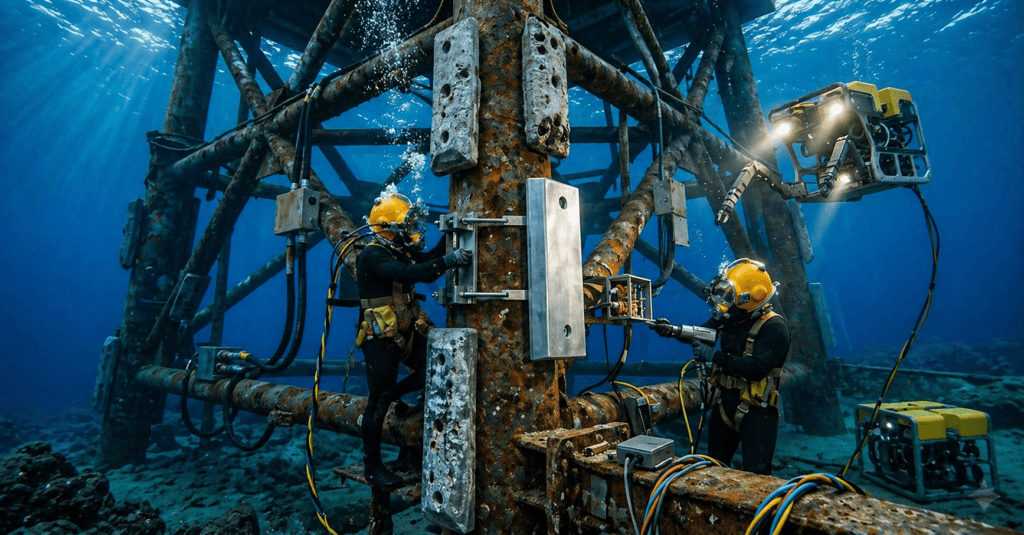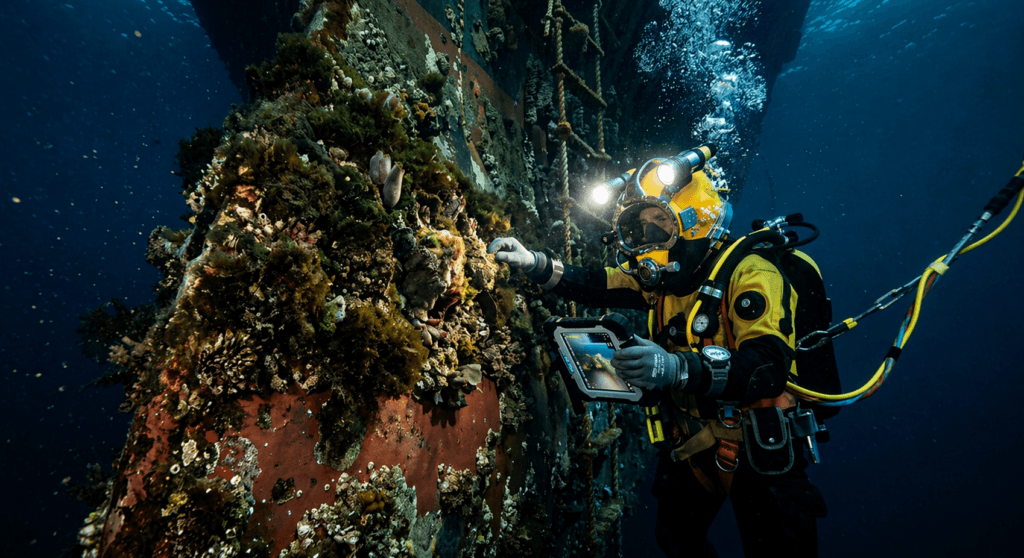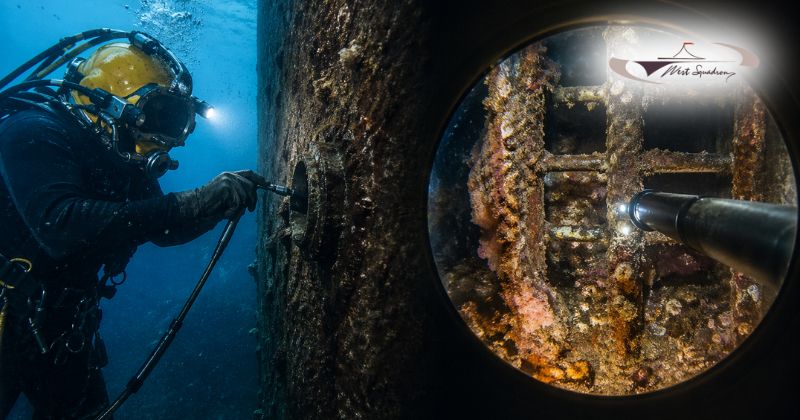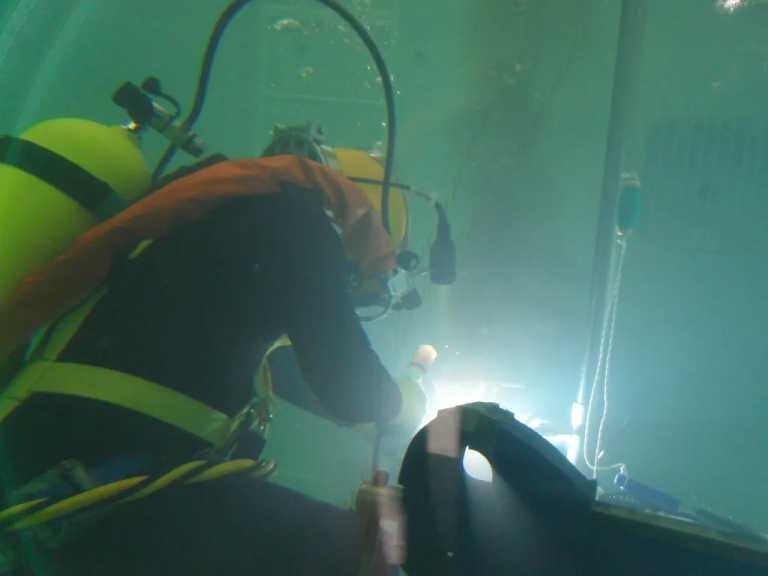
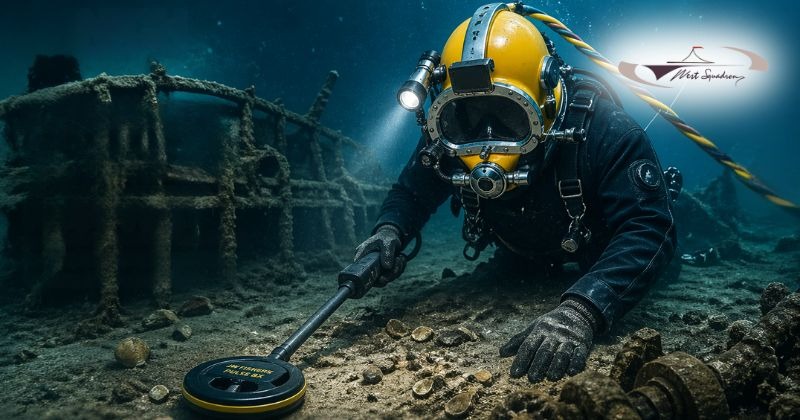
The process of retrieving objects or assets in water is quite complicated and risky, particularly in low-visibility or deep water. The loss of equipment, submerged buildings or vital parts, the time wasted in recovery can cause bottlenecks in operations and huge losses. Underwater search and recovery services offer a professional service that is technologically advanced and equipped with skilled personnel to locate and retrieve objects in a safe and efficient manner.
The capability to locate a needle in a haystack at sea under the water has transformed the manual guessing game to a science at high accuracy in the modern maritime environment. Through the use of the most recent advances in subsea scanning and robotic intervention, recovery teams now have the ability to work in situations that were previously deemed as irrecoverable, to make sure that some of the most important assets are brought back into service with the least amount of disruption.
What is Underwater Search and Recovery?
Underwater search and recovery is the process of finding, detecting, and extracting items from water bodies like oceans, rivers, and ports. These are not only operations performed on a large scale to salvage them, but they can be expanded to the recovery of delicate scientific equipment, dropped industrial equipment, or fallen infrastructure.
Such operations entail special equipment and well trained staff who may deal with harsh underwater conditions. Since the ocean floor is usually dynamic, in that sands and heavy silt are likely to shift, underwater search and recovery service has to be performed with a mixture of using high-tech eyes and physical hands so that no additional damage is caused to the asset during the lift.
How Underwater Search and Recovery Works
It is usually initiated by a thorough site evaluation and a search grid. Search is the most time-consuming stage in marine search and recovery. It involves:
- Acoustic Mapping: Side-scan sonar is used to map the area to detect anomalies on the seabed.
- Target Verification: Visual verification of the object by using ROVs or divers.
- Rigging and Retrieval: Fitting lift bags, hydraulic grabs, or special slings to lift the object to the surface.
It is important to plan and carry out well to be successful, especially with sonar search operations, where the interpretation of data is sensitive to the expertise of the analysts.
Technologies Used in Underwater Recovery
The advanced tech stack of modern recovery operations is needed to surmount the shortcomings of the human eye.
- Sonar Imaging: Side Scan Sonar (SSS) and Multibeam Echo Sounders are used to visualize through cloudy water.
- Remotely Operated Vehicles (ROVs): ROV underwater search gives the opportunity to explore the deep waters without exposing human divers to the dangers.
- Underwater Cameras: 4K underwater camera inspection tools with a high level of lumens will offer the visual clarity required in sensitive rigging work.
- Subsea Scanning Technology: 3D digital twin of the wreckage or lost asset created prior to the recovery operation.
Applications of Underwater Search and Recovery
These services are a high-conversion need for a number of high-stakes industries:
- Offshore Oil and Gas Operations: Recalling dropped drill strings or dropped subsea modules.
- Marine Salvage Operations: Removal of sunken shipping or wrecks of ships.
- Port and Harbor Management: Recoil lost fenders, anchors, or structural elements in berth spots.
- Scientific Research: It is costly to retrieve deep-water data loggers or autonomous sensors.
- Keywords: offshore recovery services, lost equipment recovery.
Benefits of Professional Recovery Services
The speed and safety of the retrieval is where the ROI of hiring a professional subsea service provider is found:
- Risk Minimization: The certified lifting gear and diver safety measures are employed by the professionals to avoid secondary accidents.
- Efficiency: Underwater retrieval services of an advanced type can find the target within hours, which would require weeks to be found with the help of traditional dragging.
- Asset Preservation: Damage to delicate or costly equipment is avoided by careful recovery methods.
- Operational Uptime: Faster recovery translates to project restarts by offshore construction crews in a shorter time.
Challenges in Underwater Search and Recovery
The recovery teams have to continually be flexible to the hazardous underwater factors of recovery:
- Poor Visibility: Silt and sediment may cause zero visibility, which necessitates the use of touch-only operation or thermal imaging.
- Strong Currents: Rapid water may blow divers and ROVs off course, and it will take special station-keeping equipment.
- Deep Water Recovery: With greater depths, pressure control, and special gas-mix diving are compulsory.
Safety Measures in Underwater Operations
In any underwater rescue operation or recovery mission, the ultimate consideration must be safety.
- Diver Safety Procedures: Each dive is supported by a secondary supply of air, surface-to-diver communications, and a standby rescue diver.
- Risk Assessments: Entanglement risk assessment (fishing nets, old cables), and current velocities inspection prior to deployment.
- Certified Equipment: This is done by ensuring that all the lift bags and wire ropes are tested and tagged to ensure that they can handle the weight of the recovery.
How to Choose the Right Underwater Recovery Service Provider
The choice of marine inspection and recovery partner is a choice that determines the success of your salvage project.
- Expert Experience: Seek a company with a record of effective recoveries at the same level of water.
- Technological Capability: Do they have the modern sonar and ROV equipment, or are they equipped with the old-fashioned ones?
- Compliance: Make sure the company complies with international diving standards (IMCA or ADAS).
Select professionals to provide safe and effective underwater recovery services.
Cost of Underwater Search and Recovery Services
The cost of underwater recovery is usually formulated in accordance with the size of the search area and the mobilization of special vessels. Although the price of deep-water operations is higher, it can be substantially less than the cost of replacement of lost property or even port-side delays.
Hint: It is better to invest expertise early, not trying to recover something by yourself, with unknown equipment, but rather ensuring that the object is actually buried and will not be lost permanently.
Future Trends in Underwater Recovery
The industry is shifting to hi-tech underwater technology:
- AI-Driven Sonar: There are algorithms that will help automatically differentiate between a rock and a metallic object, accelerating the search stage.
- Autonomous Underwater Vehicles (AUVs): Drones that are able to scan large areas of the ocean bed without any form of tethering to a ship.
- Better Haptics: Remote Operated Vehicles have robotic arms that enable surface operators to feel the object they are rigging.
Conclusion: Reliable Solutions for Underwater Recovery
The last defense against marine and offshore operators who lost valuable facilities to the deep is underwater search and recovery. Combining the experience of seasoned divers with the accuracy of 2026 sonar and robotics, such services offer a way to achieve successful results even in the most aggressive environments. Professional search and recovery is the only means of transforming what may have been a disaster into a successful recovery of an asset when it is lost.
Call us now to have underwater search and recovery services professionally.
Frequently Asked Questions (FAQ)
Q1. What is the duration of an average search operation?
Ans: It is based on the search region. A targeted search over a known drop site can require 4-12 hours, whereas a broad area search over a lost item can require days of sonar search.
Q2. Are you able to retrieve objects in zero visibility?
Ans: Yes. Professional underwater recovery operations have been able to recover objects using high-frequency sonar and underwater touch using tactile diving methods in situations where the visual cameras become useless.
Q3.How deep can an ROV be recovered?
Ans: The new industrial ROVs have a range of 3,000 to 6,000 meters deep, which is way beyond the capacity of human divers.
Q4.Can we retrieve things that are in silt?
Ans: Yes. Objects that have settled under the seabed are located by sub-bottom profilers and underwater metal detectors, and removed by water-jetting to remove the debris.
Underwater search & recovery in Singapore — scope and typical jobs
West Squadron’s underwater search and recovery services in Singapore combine sonar-assisted survey, ROV inspection and diver-based recovery. Typical jobs we deliver at Singapore anchorages and offshore include:
- Dropped-object recovery (containers, tools, cargo)
- Lost mooring & anchor chain recovery
- Sunken vessel & wreck survey / salvage support
- Evidence recovery for insurance and legal cases
- Pipeline & cable route search using side-scan sonar