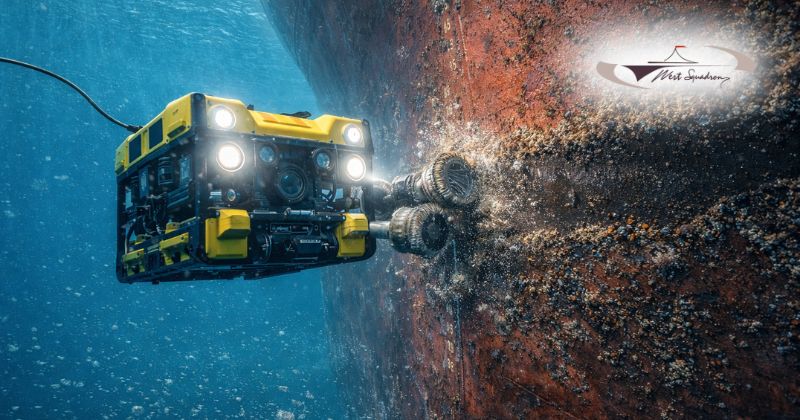
It is also necessary to maintain the underwater surfaces of a vessel to control the consumption of fuel, safeguard hull coating, and ensure sound marine operations. Fouling organisms (marine growth, slime, barnacles, etc.) may also cause a gradual increase in hydrodynamic resistance and influence propulsion efficiency. The latest ROV hull cleaning technology offers shipowners and marine operators with a convenient solution to underwater fouling and minimizing operational disturbances.
In ports and anchorages with a large amount of traffic like Singapore, remotely operated cleaning technology has the potential to supplement traditional diving work and offer an effective means of conducting standard underwater maintenance.
What Is ROV Hull Cleaning?
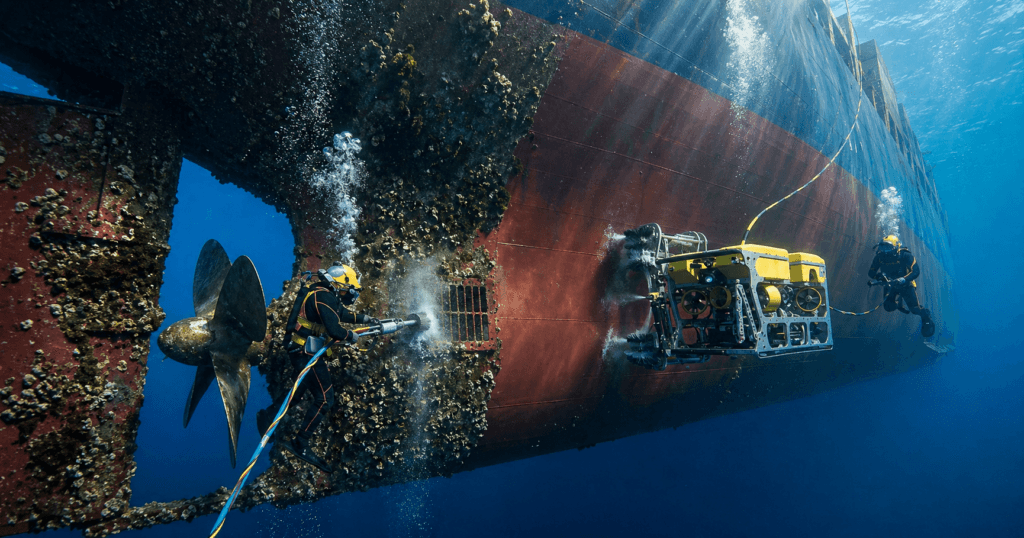
ROV hull cleaning involves a remotely operated vehicle that has cameras, cleaning devices, brushes, or special surface cleaning equipment to remove marine growth on the submerged hull of a vessel.
Contrary to traditional cleaning techniques, which require the use of divers, an ROV may be operated remotely. The operator is able to observe the cleaning process when the vehicle is moving on the surface of the underwater hull.
ROV systems may be used to eliminate slime, algae, light marine growth, and other deposits depending on the vessel and foul condition and controlled contact with the hull.
Why Does Marine Growth Need to Be Controlled?
Naturally, marine organisms adhesively stick to surfaces under water. Gradual fouling may enhance the surface roughness and hydrodynamic drag over time.
It can lead to increased propulsion demands and use of more fuel. In the case of commercial ships, even a slow efficiency decline can be huge during long routes.
Periodic underwater cleaning will thus help in:
- Better hull hydrodynamics
- Improved fuel efficiency
- Reduced operational costs
- Lower emissions
- Better vessel performance
- Increased time intervals between significant maintenance.
Cleaning frequency varies according to the type of vessel and the trading routes, water conditions, condition of the coating, and the rate at which the vessel becomes fouled.
How ROV Technology Improves Underwater Cleaning
The key benefit of the ROV-based solution is remote control. The current systems have the ability to integrate underwater cameras, lighting, propulsion systems, and cleaning devices in a small platform.
This gives the operators visual feedback as the work is being done, and the cleaning can be directed based on the hull condition.
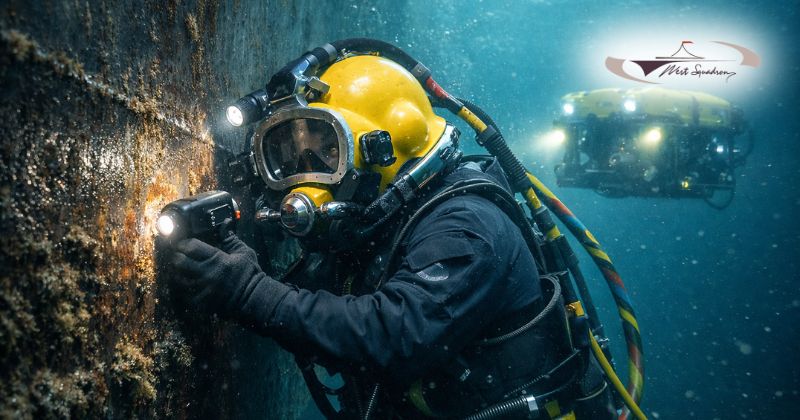
ROVs may also prove especially handy when inspecting places with less visibility or when it needs to be looked into before sending out divers.
ROV Cleaning and Underwater Inspection Services
Cleaning and inspection have been collaborating. Underwater Inspection Services can also assist in determining the level and the nature of marine growth on the hull before commencing a cleaning operation.
ROV cameras are able to record the underwater conditions and locate places where there is a need to be addressed. Visual inspection should also be done after cleaning to ensure that the condition of the treated surfaces is satisfactory.
This method of inspection enables vessel operators to make decisions concerning maintenance by examining the real underwater circumstances and not by the set cleaning regimes.
How ROV Cleaning Supports Underwater Maintenance Services
Increasingly, modern Underwater Maintenance Services involve a combination of inspection, cleaning, measurement, and repair.
To illustrate, a vessel might need to be hull cleaned due to marine growth as well as have the propeller, rudder, sea chest, or sacrificial anodes checked. These activities can be included in a planned maintenance program to minimize movements of vessels that do not contribute to maintenance and enhance efficiency.
The inspection stage can be assisted effectively by ROV systems, although the work, which involves actual underwater access, should be performed by certified commercial divers.
The Role of Commercial Divers in Singapore
The use of technology does not kill the use of experienced underwater professionals. Commercial Divers in Singapore continue to perform critical inspection, maintenance, and repair work that requires hands-on capabilities.
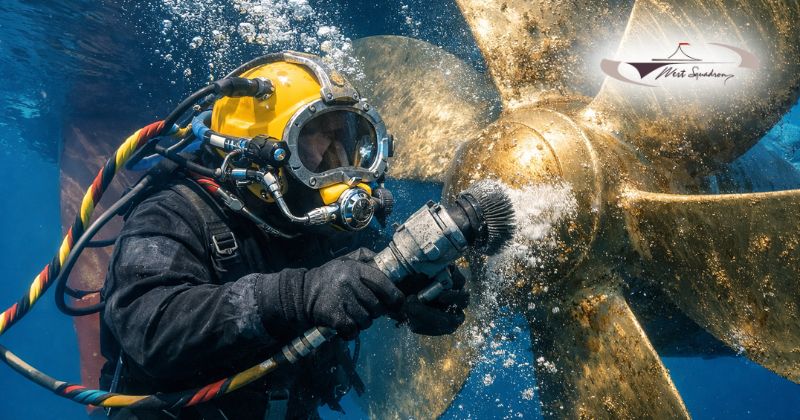
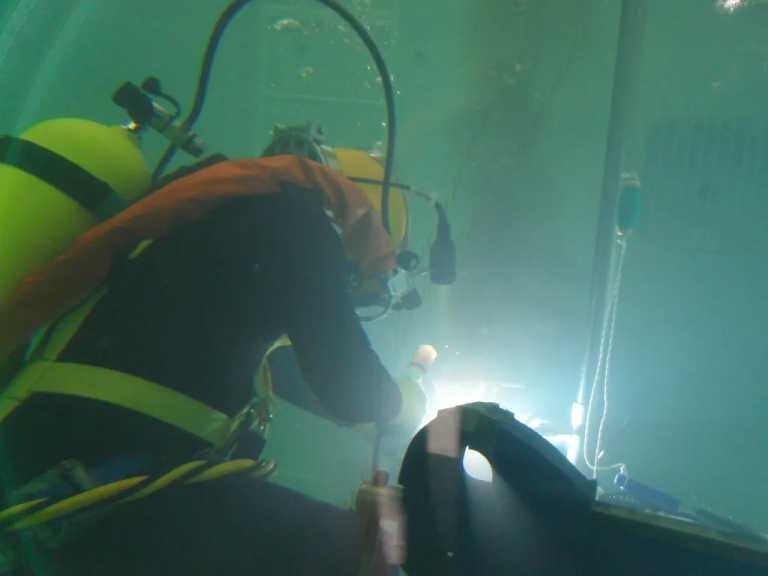
Specialized underwater services might also be needed, such as detailed underwater inspection, propeller polishing, replacement of anodes, underwater welding, structural repairs or where direct action is required.
Commercial diving and ROV technology can, as such, be complementary solutions. The correct approach is based on the ship, scope of work, and underwater conditions, safety, and technical purposes.
Supporting Underwater Repair Services
In other instances, an inspection can be used to detect any damage that needs to be addressed urgently. Depending on the nature of the repair needs and procedures, Underwater Repair Services will be able to repair appropriate defects when the vessel is in the water.
Integrating inspection, cleaning, and repair services can enable vessel operators to be more effective in reacting to underwater issues.
Nevertheless, cleaning is never to be used as an alternative to an adequate structural inspection in case of suspected damage, coating failure, corrosion, and other technical issues.
Environmental Considerations
Underwater cleaning needs to be done responsibly and must take into account the local environmental needs and the form of marine growth being removed.
The choice of cleaning methods will depend on the coating system of a vessel, the level of foulings, its location, and the regulations. Another issue that operators must put into consideration is the possibility of their release of biological material or coating debris into the adjacent waters.
Providers of Professional Underwater Marine Services should then evaluate the working environment and put proper procedures in place before commencing cleaning activities.
How Hull Cleaning Supports Vessel Performance
A clean surface of water usually presents less resistance as compared to a highly contaminated surface. The operators can also preserve the designed hydrodynamic properties of the vessel by managing marine growth.
This will be able to achieve fuel-efficiency goals, lessen unneeded engine loading, and help to decrease emissions.
In the case of fleet managers, underwater cleaning would be part of a wider maintenance plan that involves hull inspection, propeller maintenance, antifouling coating maintenance, as well as monitoring performance.
Frequently Asked Questions
Q1. What is ROV hull cleaning?
Ans: It refers to the procedure of cleaning the submerged hull of a vessel with a remotely operated underwater vehicle that has special cleaning gear.
Q2. Is ROV cleaning appropriate in all vessels?
Ans: Not necessarily. Appropriateness varies with the hull coating, degree of fouling, ship design, water environment, and the cleaning technology.
Q3. Are ROVs able to survey a hull prior to cleaning?
Ans: Yes. Most ROV systems have underwater cameras and lighting which enable operators to visually inspect hull conditions before or during cleaning.
Q4. Does hull cleaning increase fuel efficiency?
Ans: Managing marine growth can minimise extra hydrodynamic resistance and could make vessels more efficient. Real savings on fuel are determined by the vessel and extent of fouling.
Q5. Is the use of ROVs replacing the use of commercial divers?
Ans: Yes. ROVs and divers have various functions and can be used as a complement. Divers are still needed in the field of practical inspection, maintenance, cleaning, and specialized underwater work.
Conclusion
ROV hull cleaning is becoming an important technology in the management of underwater fouling as marine operators seek safer, more efficient, and less disruptive solutions to the maintenance process. Remote vehicles are able to integrate visual inspection and controlled cleaning functions and minimise diver exposure when performing appropriate tasks.
ROV technology can be included in a holistic vessel maintenance approach when combined with Underwater Inspection Services, Underwater Repair Services, and Underwater Maintenance Services. In the case of ships working in Singapore and other high-activity maritime conditions, the integration of the latest ROV systems with the professional skills of commercial diving is a viable solution in terms of maintaining underwater surfaces, ensuring efficiency of the vessels, and enhancing the overall dependability of operations over time.