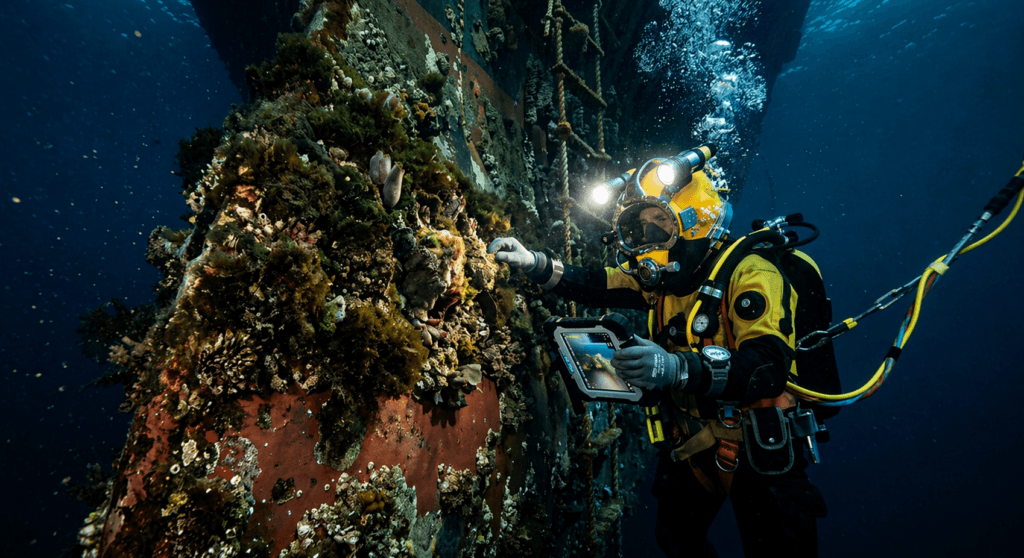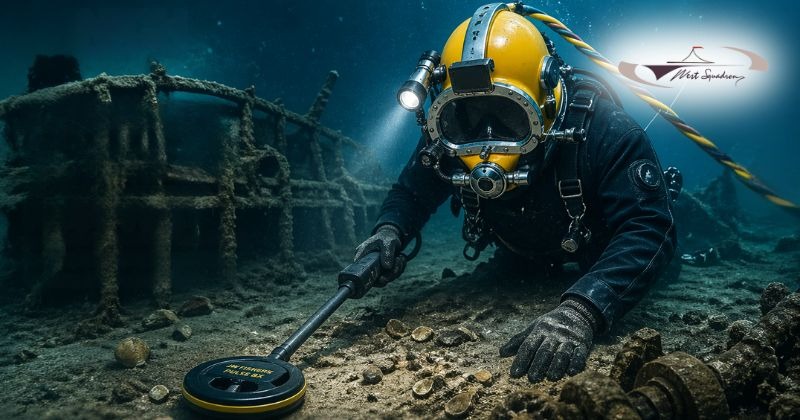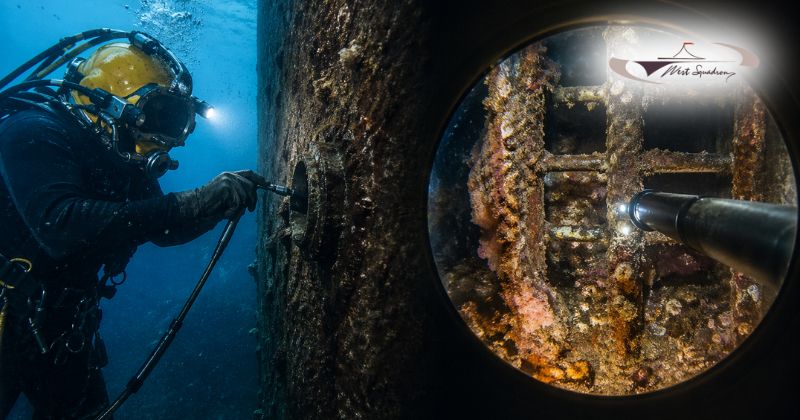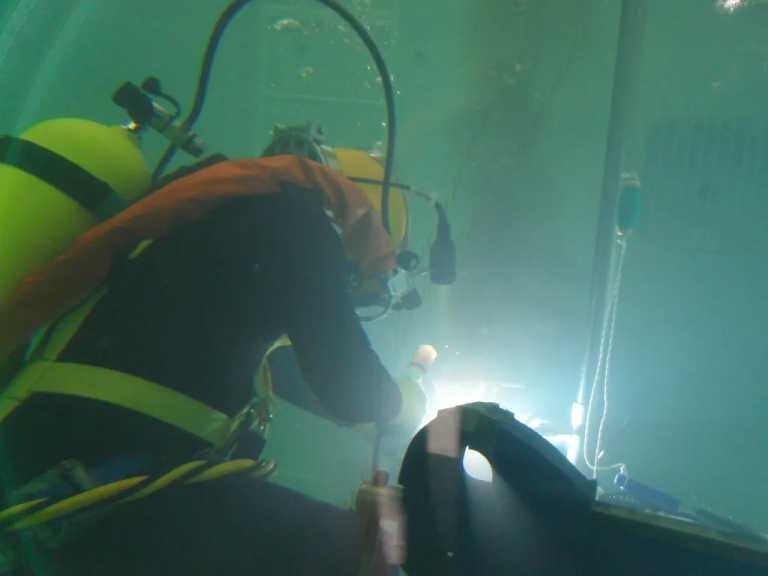
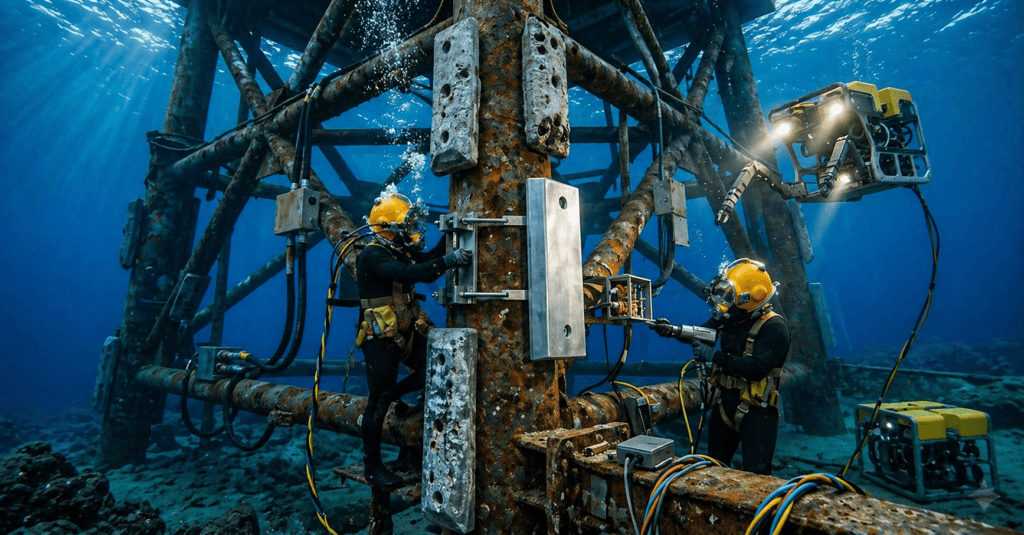
The underwater construction of a vessel is in an endless contact with seawater, which provides optimal conditions for corrosion and electrochemical deterioration. Propellers, rudders, hull structures, sea chests, and other metal parts may slowly wear off unless they are properly coated. Underwater Anode Replacement (Sacrificial or impressed current) is a significant maintenance task that assists marine operators in ensuring effective cathodic protection and increasing the service life of underwater structures.
In commercial ships that are busy in ports and anchorages, well-maintained anodes may lower the risk of corrosion and may assist in maintaining the reliability of the vessels, safety, as well as long-term maintenance planning.
What Is an Anode and Why Is It Important on a Ship?
Anodes are a critical part of a vessel’s corrosion protection system. They operate by regulating the electrochemical processes that take place when various metals are in contact with seawater.
In the absence of a proper protection system, the underwater metallic parts and steel may undergo increased corrosion. Anodes are thus attached at strategic positions on the hull and around underwater equipment to guard against important constructions.
The state of anodes is something that should be observed frequently since the efficiency of the anode reduces as the substance is used or when the system is destroyed.
What Is Underwater Anode Replacement?
Underwater replacement is the replacement of depleted, damaged, or ineffective anodes by placing new ones in the vessel when it is still floating.
Professional Underwater Anode Replacement Services may be conducted by certified commercial diving teams on surface-supplied diving gear and special underwater tools.
The task is usually initiated by an underwater inspection to establish the state and remaining content of existing anodes. The diver will then take off the old part, mounting space, fit in the new part, and ensure that the connection is good.
The precise process will be determined by the design of the vessel, the type of anode, its position, and the type of corrosion protection system.
Sacrificial Anode Replacement
One of the most common solutions to prevent corrosion in ships is Sacrificial Anode Replacement.
The sacrificial anodes are usually produced by using metals like zinc or alloy of aluminum. They are also strategically positioned to corrode instead of other more useful metallic structures linked to the system.
The dissolution of the anode, which takes place gradually, reduces its protective capacity. When the remaining material gets to an inappropriate level, then it needs to be replaced.
When replacing, commercial divers can take away the exhausted anode, examine the mounting zone, replace it with a replacement that has been specified accurately, and test that the electrical contact is working.
Impressed Current Anode Replacement
Impressed Current Anode Replacement is applicable to vessels that utilize an impressed current cathodic protection system, otherwise referred to as ICCP.
However, as opposed to sacrificial systems, ICCP relies on an external power source of electricity to supply the underwater structure with controlled protective current. Special anodes spread the current across the surrounding seawater.
Underwater replacement can be necessary in case an impressed current anode is damaged, degraded, or otherwise ineffective.
Since ICCP systems are electrical, there should be proper technical expertise and consideration of the diving team and the concerned engineering team to replace them.
Underwater Cathodic Protection and Corrosion Control
Underwater Cathodic Protection is a significant consideration of the total process of corrosion management of a vessel.
A suitable protection regime can be used to minimize corrosion on submerged steel structures and increase the service life of marine assets. The inspection is, however, not done away with by cathodic protection.
A planned maintenance program should feature the monitoring of anodes, hull coatings, electrical connections, and underwater structures.
Inspection data may assist the operators to detect the consumption of anodes that is not even, damaged parts, wear and tear of coating, and other factors that might need to be corrected.
Marine Anode Installation: What Should Be Considered?
The Marine Anode Installation is a very important task since improper location, insufficiency in electrical continuity, or inappropriate specification can lower the effectiveness of protection.
Marine operators should take into account the design of vessel corrosion protection, anode material, size, location, method of fixing, and electrical needs before installation.
The spare part must be capable of fitting in the vessel system in place and put in place in line with the relevant technical requirements.
The work done should also be documented by a professional underwater team in photographs, inspection records, measurements, and other pertinent reports.
Benefits of Professional Anode Replacement
The timely replacement of depleted underwater anodes offers multiple benefits in terms of working.
Reduced Corrosion Risk
Effective cathodic protection can be maintained to ensure that submerged metallic structures that are submerged are not overly corroded.
Extended Asset Life
A properly maintained protection system may help to extend the service life of underwater components and minimize unnecessary deterioration.
Reduced Unplanned Repairs
Problems can be detected through regular monitoring and replacement in time before the lack of protection leads to greater destruction.
Reduced Dry-Docking Disruption
In locations that are technically feasible, an underwater replacement may permit maintenance to be done when the vessel is afloat, avoiding unjustifiable operational downtime.
Best Practices for Underwater Anode Replacement
Anode maintenance must start with inspection, not just replacement, based on assumptions.
The state of the existing anodes must be evaluated, and the replacement approach must take into account the operating condition of the vessel involved, the past consumption history, the state of the hull, and the cathodic protection system.
Another factor to consider is ensuring that underwater connections and mounting solutions are of the correct quality after installation. Correct documentation is a handy source of historical data that could be used to aid in future maintenance decisions.
In the case of vessels with ICCP systems, electrical performance is to be measured also by duly qualified personnel.
Frequently Asked Questions
Q1. How do I know when a ship’s anodes need replacement?
Ans: When the material remaining on the anode is not sufficient to offer effective protection or when it is damaged, detached, or otherwise ineffective, they may be replaced. Inspection is the best way to determine their condition.
Q2. What is the difference between sacrificial and impressed current anodes?
Ans: In Sacrificial anodes, underwater structures are safeguarded by the electrochemical reaction of the anode. Impressed current systems employ an external power supply to provide controlled protective current by use of special anodes.
Q3. Do anodes have to be replaced in water?
Ans: Yes. Depending on the design of the vessel, the work and the safety procedures, as well as technical specifications, appropriate anodes can often be replaced by competent commercial divers when the vessel is afloat.
Q4. What is the frequency at which ship anodes should be replaced?
Ans: All replacements do not have a common replacement interval. The consumption is determined by the vessel, operating environment, the type of anode, coating condition, and the cathodic protection system. Planning of replacement is best based on regular inspection.
Q5. Why is underwater anode replacement important?
Ans: It assists in keeping the vessel corrosion system intact, lessening the chances of the excessive corrosion underwater and ensuring the long-term soundness of underwater marine construction.
Conclusion
Corrosion control plays a crucial role in ensuring the structural integrity and operational soundness of commercial vessels. Underwater Anode Replacement ( Sacrificial or impressed current ) is a valuable maintenance measure where current anodes are either exhausted, damaged, or ineffective.
The proper use of a vessel with sacrificial protection or an impressed current system requires professional inspection, proper choice of the components, proper installation, and proper documentation. A combination of Underwater Anode Replacement Services, Underwater Cathodic Protection, and periodic assessments of the underwater conditions would allow shipowners to be proactive in addressing corrosion and minimize unnecessary maintenance risks, as well as help to extend the service life of the vessels.
Related services
In-water anode replacement — sacrificial and ICCP
Depleted anodes leave the hull, rudder and propeller vulnerable to corrosion. West Squadron’s in-water anode replacement in Singapore restores cathodic protection without drydocking. IMCA divers replace sacrificial zinc/aluminium anodes and inspect/replace impressed-current (ICCP) components at every Singapore anchorage.