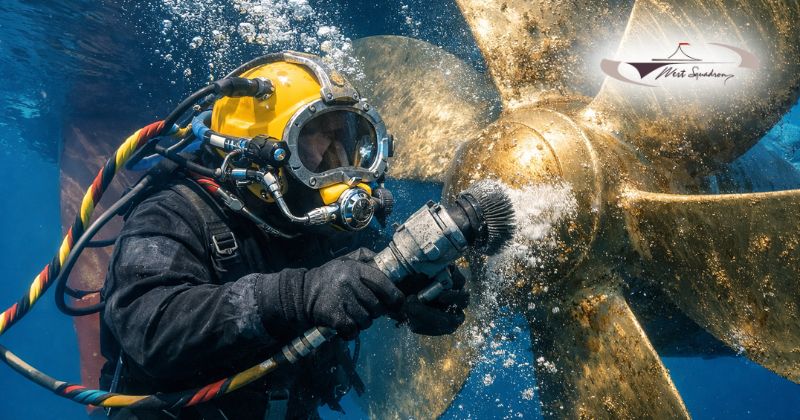
A propeller is one of the most significant parts of a vessel that affects the propulsion efficiency, speed, maneuverability, and fuel consumption. Due to constant operation when submerged, the propeller is vulnerable to marine growth, corrosion, cavitation, sediment, and other factors that may slowly diminish performance. Periodic underwater repairs are thus necessary with commercial ships that require running smoothly and effectively.
Underwater Propeller cleaning offers an effective method for cleaning propeller blades and deposits when the vessel is still afloat. It can be used in conjunction with correct inspection and maintenance procedures to restore propulsion efficiency, aid in fuel savings, and minimize unnecessary operational expenses.
Why Propeller Condition Matters to Vessel Performance
The propeller is meant to convert engine power to thrust. Its blades are based on a well-designed surface and shape to work effectively in water. This can be disrupted by even comparatively tame marine growth or surface deposits.
Propeller blades and other components underwater can be accumulated by barnacles, algae, slime, shells, and other organisms. Blade surface may be unevenly fouled and become resistant, and damage or roughness may be a factor in lower propulsion efficiency.
To commercial operators, such losses in performance can be enormous in the long run since the ship might have to use more engine power to sustain its normal operating speed.
What Causes Ship Propeller Fouling?
Ship Propeller Fouling Removal is a necessary action since propellers are in constant exposure to the marine environment. The extent of fouling depends on the region where the vessel is operating, the temperature of water, the speed of the vessel, the time spent at anchor, and the marine conditions.
Fouling can be common in slime, algae and barnacles, shell deposits, and other marine life. Underwater components can also accumulate sediment and debris.
Besides biological fouling, propellers may experience surface damage due to corrosion, cavitation, mechanical damage, or improper cleaning practices. This is the reason why cleaning must preferably be accompanied by a visual check as opposed to being an isolated exercise.
How Underwater Propeller Cleaning Works
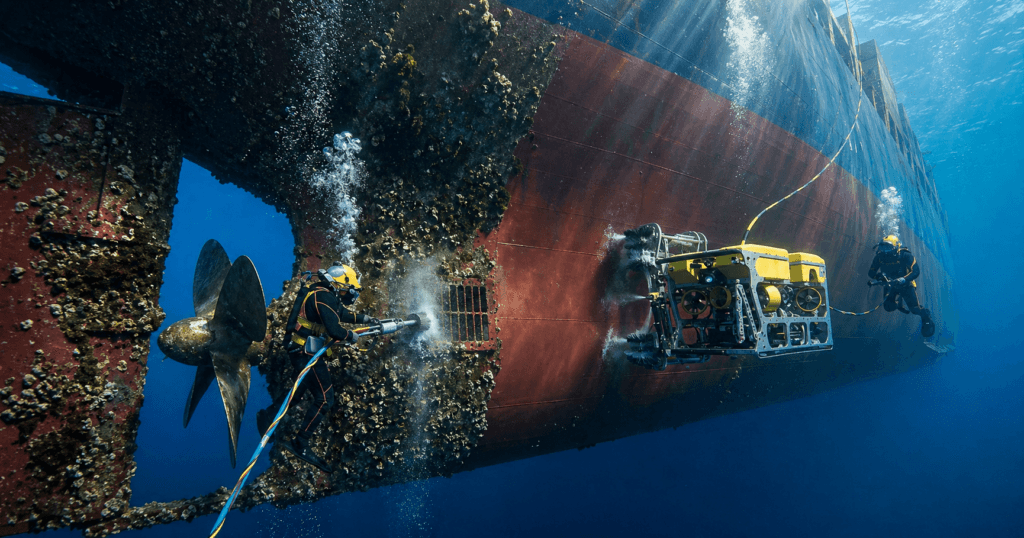
Professional Underwater Propeller Cleaning Services are normally performed by qualified commercial divers using appropriate underwater tools and controlled cleaning techniques.
Before work begins, the propeller is inspected to determine its general condition and the type and severity of fouling present. The cleaning method is then selected according to the propeller material, surface condition, fouling level, and applicable environmental requirements.
The objective is to remove unwanted marine growth and deposits without damaging the propeller surface or protective systems.
After cleaning, the propeller can be visually inspected again to identify previously obscured defects such as surface damage, cracks, deformation, or signs of cavitation.
Underwater Propeller Polishing vs. Cleaning
Underwater Propeller Polishing and cleaning are not synonymous, although the terms are used interchangeably.
The main aim of cleaning is to remove marine organisms, slime, and deposits on the propeller. Polishing takes the next step by enhancing the smoothness of the propeller surface where necessary.
A smoother propeller surface would be useful to minimize friction of the surface and allow more efficient flow of water around the blades. That being said, the polishing technique should be determined by the material of the propeller and its current state.
Professional assessment is noteworthy since violent or inappropriate methods may easily cause an injury to the propeller surface.
Benefits of Regular Marine Propeller Maintenance
Sound Marine Propeller Maintenance is a significant aspect of a larger underwater maintenance plan of a vessel.
Operators can be helped by regular consideration of propeller condition:
Maintain Propulsion Efficiency
An efficiently maintained and clean propeller can work nearer to its desired hydrodynamic characteristics.
Support Fuel Efficiency
High fouling could lead to an increase in power needed to keep the vessel moving. Maintaining the propeller in good condition can thus lead to Vessel Fuel Efficiency.
Reduce Unplanned Maintenance
The emerging issues can be identified early by regular check-ups to ensure that the issues are not more expensive or a disruption to the operation.
Improve Vessel Reliability
A well-maintained propulsion system ensures the reliable operation of the vessel and may contribute to minimizing performance-related concerns.
How Fouling Affects Fuel Consumption
Propulsion efficiency is closely related to fuel consumption. With a propeller covered by marine growth or surface wear, it can require the engine to produce extra power to maintain the same speed of the vessel.
This may lead to increased fuel burn and operating cost.
To shipowners and fleet managers, tracking of propulsion performance and underwater maintenance operations may offer valuable insights on when cleaning or additional inspection might be necessary.
Nevertheless, the reality of fuel saved after cleaning is subject to a number of factors, such as the design of the vessel, the condition of the engine, the severity of fouling, the operating profile, weather, the condition of the loading, and speed.
When Should a Vessel’s Propeller Be Cleaned?
No cleaning interval is applicable to all vessels. The operators are to take into consideration the trading routes of the vessel, the duration of the vessel at the anchorage, Fouling, the past results of the inspection, and the alteration in the propulsion performance.
Unanticipated higher fuel usage, lower speed with standard engine settings, observable fouling, or altered propeller performance can suggest that an underwater examination may be warranted.
A conditional approach will enable the operators to plan maintenance based on the actual state of the propeller as opposed to depending purely on time schedules.
Environmental Considerations During Underwater Cleaning
Proper underwater cleaning must be done with keen regard to the marine environment. The removal of marine organisms off a vessel has the potential to discharge biological material into the water, and removal of marine organisms using inappropriate cleaning practices can cause damage to the coatings or produce debris.
This is why cleaning must be based on local environmental laws, coating systems, type and location of fouling, and port requirements.
These considerations ought to be considered by professional marine service providers prior to undertaking work and employ methods suitable to the particular vessel and conditions.
Combining Cleaning With Underwater Inspection
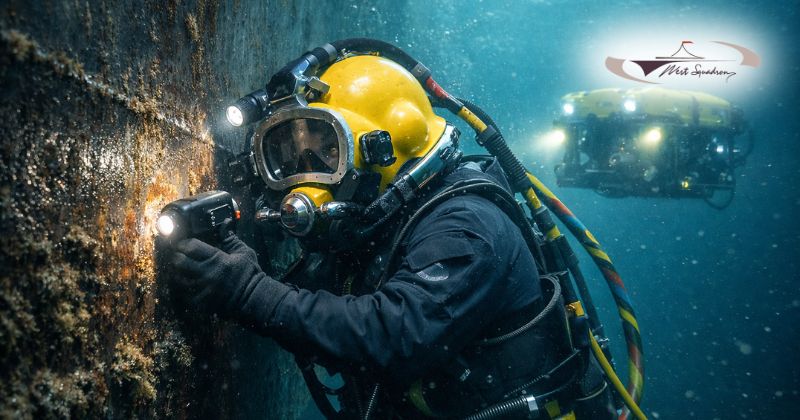
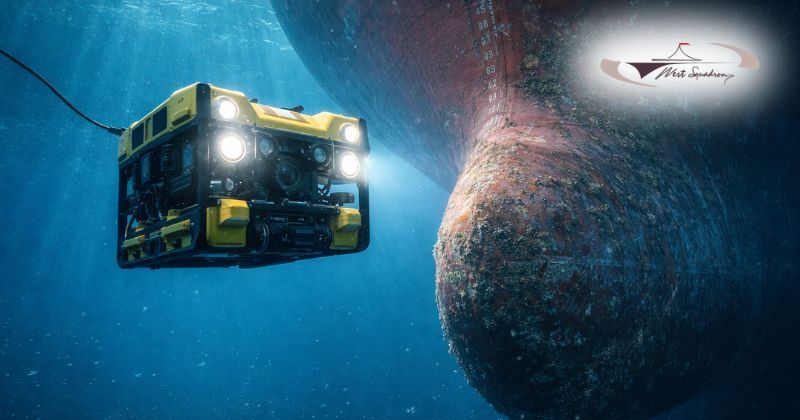
Washing may be a great time to inspect underwater propulsion systems in greater detail. After the marine growth has been cleared, divers will be able to examine the propeller, rudder, stern region, and other underwater structures visually.
Further inspection methods might be necessary in case of cracks, corrosion, blade deformation, cavitation, or any other defects.
Maintenance and inspection together can assist vessel operators to gain a more precise view of the situation of underwater assets and make more informed maintenance choices.
Frequently Asked Questions
Q1. What is underwater propeller cleaning?
Ans: It is the process of removing marine growth, slime, deposits, and other fouling from a vessel’s propeller while the vessel remains afloat.
Q2. Does propeller cleaning improve fuel efficiency?
Ans: Cleaning can reduce the performance losses associated with marine fouling and may help improve propulsion efficiency. The real fuel savings will be based on the ship and the extent of fouling.
Q3. What is the difference between propeller cleaning and polishing?
Ans: Cleaning will eliminate fouling and deposits whereas polishing will aim at enhancing the smoothness of the propeller surface where technically feasible.
Q4. What is the frequency of cleaning a ship propeller?
Ans: The optimum frequency is based on the fouling conditions, the operations of the vessel, the trade routes, the temperature of the water, and the results of the inspection. Condition-based maintenance tends to be more applicable compared to the use of a single interval on all vessels.
Q5. Is it possible to have propeller cleaning without dry-docking?
Ans: Yes. Depending on the vessel, location, environmental factors, and scope of work, it is possible to perform suitable underwater cleaning work when the vessel is afloat.
Conclusion
The propeller is a vital part of the vessel, as it requires well-maintained propellers to ensure efficient propulsion and reliability. Marine growth, fouling, surface roughness and underwater damage may lead to slow propulsion performance and also demand more power to be used to sustain normal speed. Underwater Propeller cleaning, which is regularly carried out with the support of inspection and proper maintenance procedures, can help mitigate these problems before it leads to increased operational losses.
Underwater Propeller Polishing, Ship Propeller Fouling Removal, and frequent Marine Propeller Maintenance included in a proactive vessel maintenance program will help shipowners to address the Underwater Equipment condition and promote long-term Vessel Fuel Efficiency. This practice can help to improve the performance of commercial operators, make their maintenance planning more predictable, and run their vessels more efficiently.
Underwater propeller cleaning at Singapore anchorages
In-water propeller cleaning in Singapore restores hydrodynamic efficiency without pulling the vessel out of service. Marine growth on propeller blades typically increases fuel consumption by 3–7% and can trigger cavitation damage. West Squadron’s IMCA-certified divers deliver full propeller cleaning at every Singapore anchorage on the vessel’s schedule.
What we clean and how
- Full propeller blade cleaning (leading & trailing edges, root, tip)
- Rudder cleaning & polishing
- Stern-tube seal area inspection
- Underwater cameras for before/after evidence