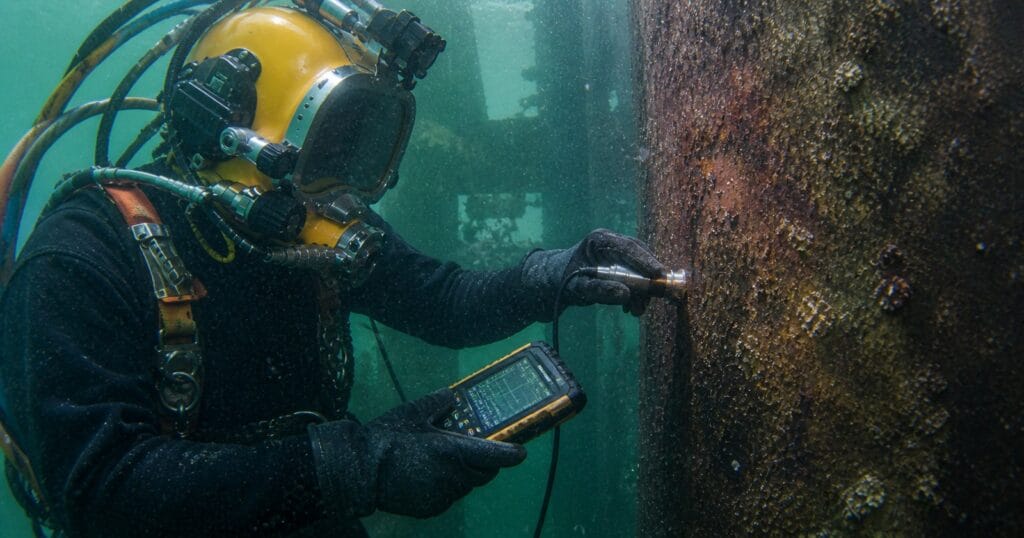
Singapore ranks amongst the major maritime ports in the world, where commercial ships, offshore facilities, and port facilities must be constantly inspected to ensure safety, reliability, and adherence to regulations. Early identification of structural faults prior to developing critical failures is crucial in reducing downtime and increasing the life cycle of marine assets. Here, underwater NDT and ECT services in Singapore are crucial.
Through qualified commercial divers along with modern inspection equipment, underwater inspections are able to detect cracks, corrosion, loss of material, bad weldings, and corrosion of coating without causing harm to a structure under inspection. The non-destructive methods assist ship owners, offshore operators, and marine contractors in making informed decisions on maintenance without subjecting them to unnecessary repairs and disruptions of operations.
What Are Underwater NDT and ECT Services?
Underwater Non-Destructive Testing (NDT) is the term that is applied to the inspection techniques to determine the state of underwater structures without any destruction. The methods assist in determining the integrity of the hulls of ships, offshore platforms, pipelines, jetties, sea chests, and underwater infrastructures when the asset is still in operation.
Eddy Current Testing (ECT) Services Singapore is one of the most commonly used techniques that identify surface and near surface defects of conductive materials through the induction of electromagnetic fields. ECT has shown great use in detecting cracks, corrosion, and degradation of materials in marine components.
When combined, NDT and ECT help to increase successful condition testing and minimized maintenance costs and downtimes.
Why Underwater NDT Is Essential
Marine assets work in a hostile environment where they are subjected to saltwater, pressure differentiation, mechanical stress, and marine proliferation. In the long-term, these conditions may result in:
- Corrosion
- Fatigue cracks
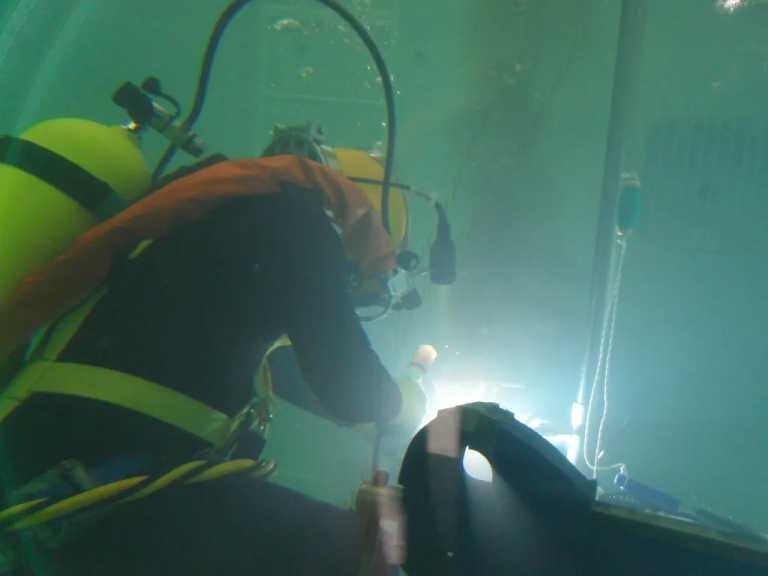
- Weld defects
- Material thinning
- Coating failures
- Structural deformation
Periodic checks will assist in the detection of these problems at an early stage so that preventive maintenance can be undertaken by the operators before it is too late.
Common Underwater NDT Methods
Visual Inspection
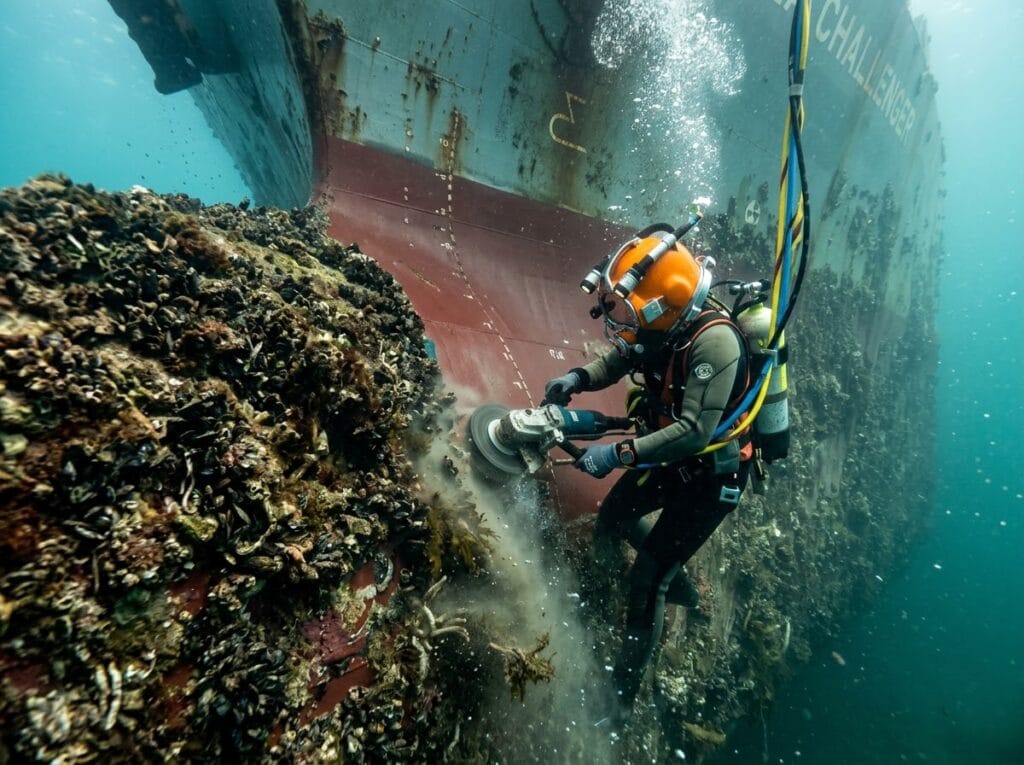
Commercial divers carry out thorough visual inspections with high-definition underwater cameras of high definition to determine the structure and detect visible flaws.
Eddy Current Testing (ECT)
Eddy Current Testing (ECT) Services Singapore uses electromagnetic fields to detect surface cracks, corrosion, and flaws without removing protective coatings. The method is best suited to the inspection of non-ferrous metals, welds, and important structural components.
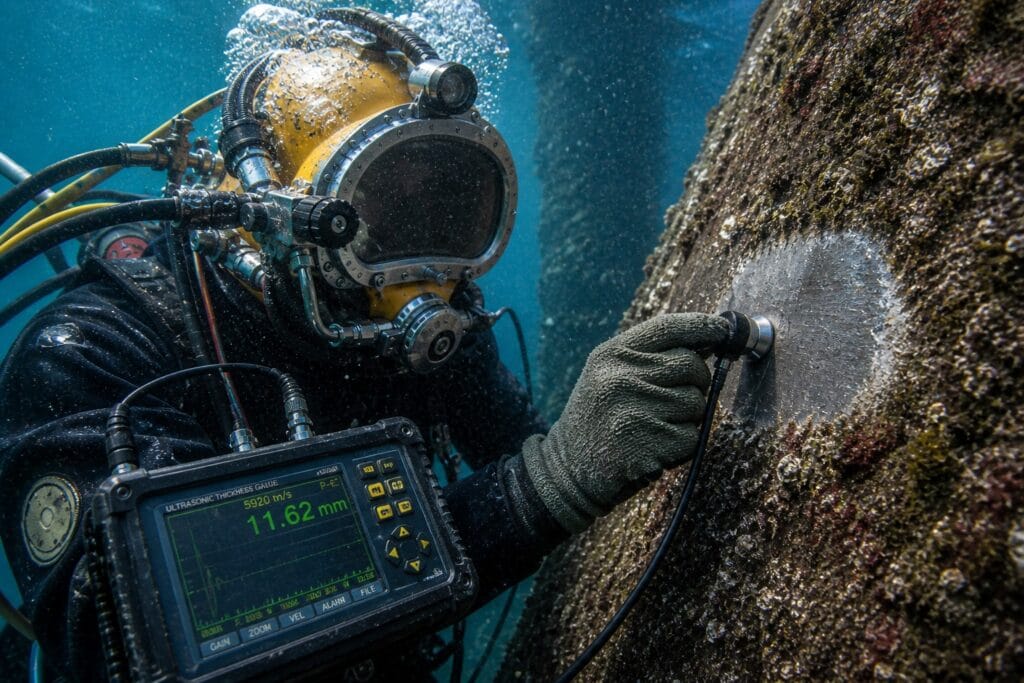
Ultrasonic Thickness Measurement
Ultrasonic devices can be used to measure material thickness in order to detect corrosion, erosion, and loss of metal in hull plating, pipelines, and offshore structures.
Magnetic Particle Inspection
This technique detects topical and close to topical flaws in ferromagnetic components, and hence is apt in inspection of welds and structural integrity.
All methods of inspection are chosen based on the type of asset, material, and project needs.
Applications of Marine NDT Inspection Services
Professional Marine NDT Inspection Services are in support of numerous maritime industries.
Common applications include:
- Ship hull inspections
- Offshore platform inspections
- Sea chest assessments
- Underwater pipeline inspections
- Port infrastructure inspections
- Mooring system evaluations
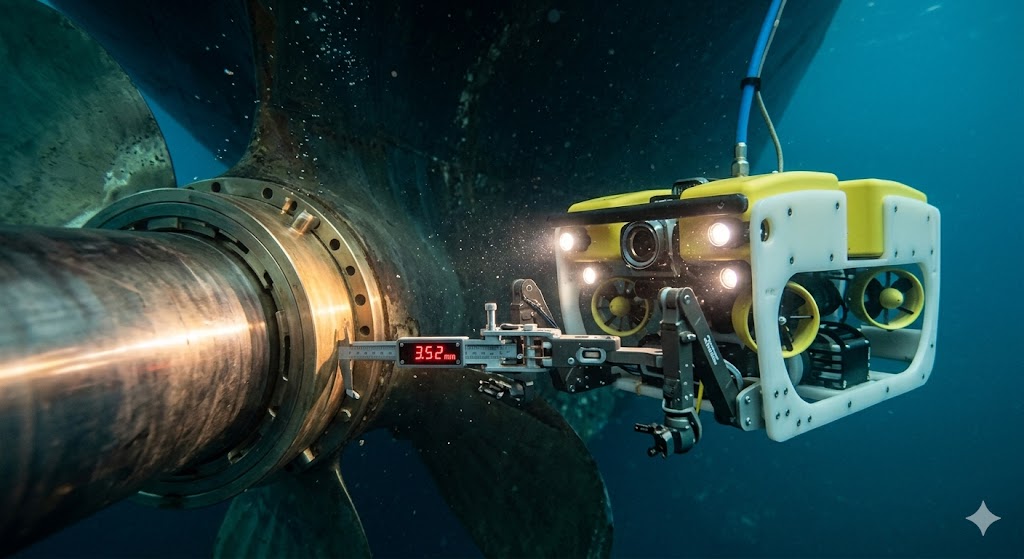
- Rudder and propeller checks.
- Weld integrity verification
These audits are a valuable source of information in terms of maintenance planning and classification society compliance.
Benefits of Commercial Diving NDT Services
Professional Commercial Diving NDT Services are a combination of skilled and specialized divers, equipped with specialized inspection equipment that provides credible results in difficult underwater conditions.
Key benefits include:
Reduced Vessel Downtime
A lot of inspections can be done when vessels are in the water, which saves the use of dry docking, as well as reduces the amount of operational disturbance.
Improved Asset Reliability
The early detection of defects assists in avoiding sudden failures, lowering the cost of repairs, and increasing the life of equipment.
Regulatory Compliance
The inspection reports maintain adherence to the classification society standards, port authority standards, and international standards in maritime transport.
Cost-Effective Maintenance
Condition-based maintenance enables operators to make priority repairs based on real inspection information, as opposed to regular maintenance.
Best Practices for Underwater Inspection Programs
Marine operators ought to observe a couple of best practices in order to maximize the effectiveness of inspection.
Schedule Regular Inspections
The frequency of the inspection must take into account:
- Vessel age
- Operating conditions
- Trading routes
- Environmental exposure
- Classification requirements
Regular check-ups are used to detect decay before it impacts operational efficiency.
Use Certified Inspection Teams
The inspections are carried out by qualified commercial divers and certified NDT technicians who make sure that inspections are done safely, correctly, and in accordance with the established industry standards.
Combine Multiple Inspection Techniques
Professional Underwater Inspection Services Singapore has a tendency to combine visual inspection, ultrasonic test, eddy current test, and digital reporting to offer a complete structure assessment.
This combined solution enhances the accuracy of the inspection and facilitates predictive maintenance planning.
Emerging Technologies in Marine NDT
With the current technological advancements, the quality and efficiency of underwater inspection are enhanced.
Inspection programs are becoming more and more based on:
- ROV-assisted inspections
- High-definition underwater imaging
- Digital defect mapping
- AI-assisted data analysis
- 3D underwater scanning
- Cloud-based inspection reporting
These innovations enable shipowners to take quicker, information-driven maintenance actions and enhance long-term asset management.
Frequently Asked Questions (FAQs)
Q1. What are underwater NDT and ECT services?
Ans: They are non-destructive inspection techniques applied to assess the integrity of underwater marine structures without damaging them, and are helpful in determining corrosion, cracks, weld defects, and material loss.
Q2. What is Eddy Current Testing used for?
Ans: Eddy current Testing is a process of identifying surface and near-surface defects in conductive materials through electromagnetic fields. It is usually employed to examine welds, hull structures, and offshore parts.
Q3. Is it possible to carry out underwater NDT inspections without dry docking?
Ans: Yes. Special gear is used by certified commercial divers with the aim of carrying out inspections when the vessels are still afloat, which minimizes downtime and maintenance expenses.
Q4. What underwater assets need underwater NDT inspections?
Ans: The routine NDT inspections are beneficial to ship hulls, offshore platforms, pipelines, sea chests, jetties, rudders, propellers, mooring systems, and underwater infrastructure.
Q5. Why are regular underwater inspections important?
Ans: Regular checking allows to identify structural wear and tear in time, enhances safety, cuts down on repairs, increase equipment life, and enhance adherence to maritime standards.
Conclusion
To ensure the integrity of the marine assets, the inspection of the marine assets must be done accurately, minimizing the disruption, but providing credible results. Underwater NDT and ECT services in Singapore is an excellent solution to hidden defects by integrating the latest testing technologies with professional diving crews to identify defects before they can affect the safety or performance of the operation. Professional NDT and ECT services aid in proactive maintenance, regulatory compliance, and long-run asset reliability throughout the maritime industry, including hull inspections and offshore infrastructure inspection, corrosion monitoring, and weld verification.
Get a quote in 2 hours — Call +65 8388 0288 or request via our contact form.