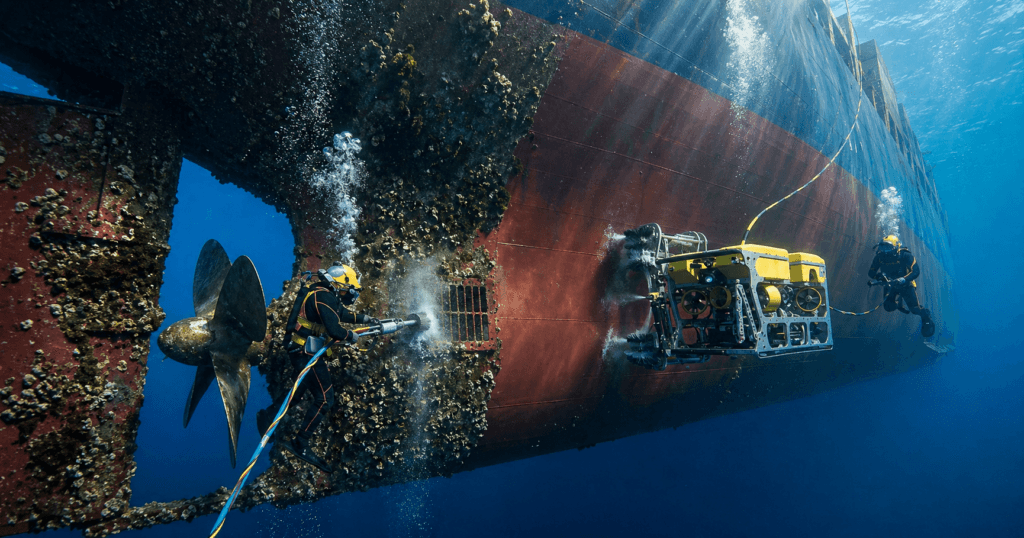
The hull is the interface in the global shipping industry most significant to a vessel and the environment. Nevertheless, such an interface is subject to continuous attacks. Biofouling, algae, and corrosion of marine vessels are persistent and can be likened to parasites that can affect the performance of a ship.
In the absence of a strict maintenance program, the drag on the hull may grow up to 40 per cent, causing enormous surges of fuel consumption and carbon emissions. Underwater and above-waterline hull cleaning is the necessary measure to reinstate the efficiency of a vessel, structural safety, and adherence to stringent international environmental regulations.
What is Hull Cleaning?
Hull cleaning is a process of mechanically removing marine life and calcareous formations (such as barnacles) as well as surface corrosion across the full skin of a ship. Although the name may be used to mean the part of the ship that is underwater, a truly professional ship hull cleaning service will clean the splash zone and the part of the ship that is above the water, too.
This is done by using a mix of mechanical scrubbing, high-pressure washing, and special bio-fouling removal methods. The operators have ensured that the vessel slides through the water with very little resistance by keeping the surface smooth, and the engine is utilised in propelling the vessel, instead of overcoming friction.
Difference Between Underwater and Above-Waterline Cleaning
In order to keep the marine hull maintenance standards, one should realise that a ship is in two different environments at the same time.
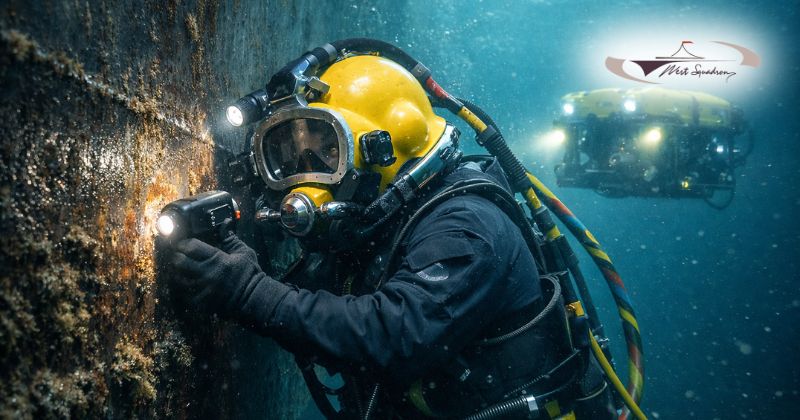
- Underwater Hull Cleaning: This is aimed at the wetted part of the ship. Here, the main area of interest is the elimination of biofouling-soft growth (slime/algae) and hard growth ( barnacles/tubeworms ). Since this job is done underwater, it demands special diving forces or robots.
- Above Waterline Cleaning: This applies to the hulls above the surface. Although biofouling is not as much of a problem in this case, this area is extremely prone to corrosion, rust streaks, and industrial staining, all of which are caused by salt spray. The cleaning of this is necessary to avoid corrosion of the atmosphere and to preserve the aesthetic and professional appearance of the vessel.
Why Hull Cleaning is Critical for Vessel Performance
Hull Roughness is a main contributor to operational costs.
- Fuel Efficiency Improvement: A clean hull enables the vessel to run at the same speed with reduced RPMs. A thin layer of slime can raise fuel usage by 5-10 percent, and heavy barnacle growth can push it beyond 30 percent.
- Hull Performance Optimization: No growth is removed, which eliminates pitting corrosion. The marine life that sticks to the hull may ruin the protective anti-fouling paint, leaving the raw steel to the corrosive ability of seawater.
- Speed and Schedule Integrity: A fouled hull reduces the speed of a ship. And in a Just-in-Time world of logistics, a clean hull will have you making your port windows and the late-arrival charges.
Methods of Hull Cleaning
The use of hand-scrubbing in hull performance optimization has passed. We are now employing a variety of hi-tech approaches:
Applications of Hull Cleaning Services
The sea cannot be resisted by any ship. Sectors that are very competitive and require such services are:
- Cargo Vessels: Thin Margins: Operating fuel expenses as low as possible.
- Oil and Gas offshore vessels: offshore cleaning services play a vital role in DP (Dynamic Positioning) vessels, which need to remain at accurate coordinates despite the currents.
- Tankers: It is important to make sure that tanker hull cleaning services are carried out on a regular basis in order to avoid the spread of invasive species between ports all over the world.
- Passenger Ships: To keep a clean appearance above the waterline, coupled with maximum efficiency below.
Benefits of Regular Hull Cleaning
The marine growth removal Return on Investment (ROI) is short-term and quantifiable:
- Long Asset Life: You also extend the periods between costly dry-docking operations by preserving the anti-fouling coating.
- Less Emission: The less fuel burnt directly translates to less carbon footprint, aiding companies to achieve IMO (International Maritime Organization) “Green Shipping” goals.
- Invasive Species Prevention: It is now common to find that many ports require a clean hull in order to avoid bio-invasion; the hitch-hiking species interfere with local ecosystems.
Hull Cleaning vs. Hull Maintenance
Although the terms are interchangeable, they are used to denote different phases of care:
- Hull Cleaning: The mechanical cleaning of debris and growth. It is a topical treatment.
- Hull Maintenance: Includes a wider range of activities that involve inspection and cleaning of vessels, but also incorporates application of special finishes, anode replacement, and structural repairs.
How to Choose the Right Hull Cleaning Service Provider
In choosing a hull cleaning company, vessel managers should seek three pillars:
- Environmental Compliance: Do they have reclaim? The current policies usually involve the fact that the debris removed from the hull should be collected and filtered in such a way that the local harbor is not contaminated.
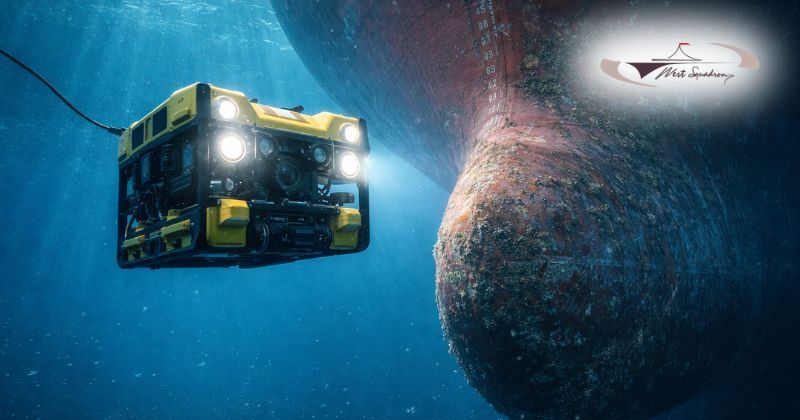
- Technology Suite: Do they have ROV hull cleaning, or are they restricted to divers? ROVs are typically quicker and provide digital video documentation of the cleaning.
- Certified Safety: Require the provider to adhere to IMCA or local port authority safety requirements of underwater work.
Select professionals to provide quality hull cleaning.
Cost of Hull Cleaning Services
The cost of hull cleaning is a variable investment. It depends on the size of the vessel (VLCC vs. Tug), the number of the “Sea Chest”, and the extent of the fouling.
Expert Hint: It is much cheaper to do regular cleaning as compared to Reactive cleaning. It is quick and simple to get rid of slime; whereas getting rid of two years of calcified barnacle growth takes time, more machinery, and may leave your hull coating with some damage.
Environmental and Regulatory Considerations
The landscape of the In-Water Cleaning is highly controlled in 2026. To make sure that cleaning does not release the toxic heavy metals of anti-fouling paints into the water, organizations such as BIMCO and the IMO have worked out these guidelines. To remain on the right side of maritime law, it is necessary to select a provider that implements non-abrasive technology in cleaning.
Conclusion: Maintain Efficiency with Hull Cleaning
Underwater and above-waterline hull cleaning is no longer a cosmetic option, but a mechanical and financial requirement. It is by maintaining the hull of your asset in a state of smoothness and lack of marine growth that you are preserving the structural integrity of your asset, saving on your fuel dollars, and being a good citizen to the global marine environment.
Get in touch with us to have your hulls professionally cleaned.
Frequently Asked Questions (FAQ)
Q1. At what frequency does the hull of a ship need to be washed?
Ans: To control the growth of slime and to ensure that hard growth does not take root, a vessel that has to work in tropical waters should have a “Proactive” cleaning after every 3 to 6 months to avoid the slime.
Q2. Is the anti-fouling paint susceptible to harm from cleaning?
Ans: Yes, if done incorrectly, with excessively aggressive brushes. Non-abrasive brushes or water-jet systems that are used by professional marine service providers to clean the growth without removing the paint are, however, not considered abrasive.
Q3. What is Propeller Polishing?
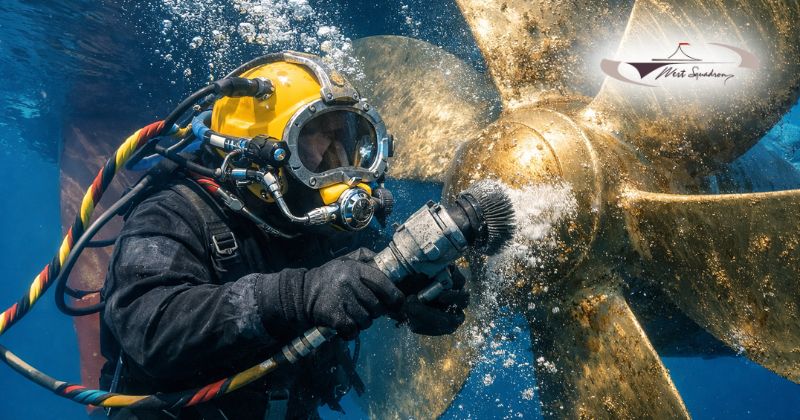
Ans: Propeller polishing is often done with hull cleaning, and is done using extremely fine abrasives to give the blades a mirror finish, which alone offers another 2-3 percentage points of fuel efficiency.
Q4. Is ROV better than diver cleaning?
Ans: ROVs are safer than usual and offer a stable digital history. Nevertheless, even the niche markets, such as bow thrusters and internal sea chests, still need divers.