One of the most important safety systems in a vessel is the steering system, which has a direct impact on the maneuverability, accuracy in navigation, and control of operations. The rudder pintles and bearings are at the center of this system as they support the rudder and enable it to move freely when navigating. With time, regular mechanical stresses, exposure to seawaters, and natural wear may cause clearance between these parts, which may influence steering functions and structural integrity.
Routine Underwater Rudder pintle clearance measurements allow marine operators and shipowners to monitor rudder wear without dry docking to determine developing problems before they turn into expensive failures. With the combination of seasoned commercial divers, accuracy in measurement tools, and superior underwater inspection technologies, ships are able to ensure steering stability with minimum downtime of operation.
What Are Rudder Pintle Clearance Measurements?
Rudder pintle clearance measurement is a specialized underwater inspection process that measures the level of wear between the rudder pintles, bearings, and supporting structures. This clearance measurement aids in assessing the condition of the rudder that does not exceed the acceptable operational limits set forth by the vessel manufacturer or classification society.
Clearance measurements, in contrast to visual inspections only, offer quantitative information to support predictive maintenance and informed repair planning.
Why Rudder Clearance Monitoring Is Important
The rudder is put under continuous hydrodynamic forces in each voyage. These loads could, over time, lead to:
- Bearing wear
- Pintle wear
- Increased steering play
- Misalignment
- Vibration
- Structural fatigue
Excessive clearance can be left unchecked, which can result in a reduction in steering efficiency, leading to higher maintenance and possible loss of vessel safety.
Routine Rudder Pintle Clearance Inspection enables the maintenance staff to identify wear early enough and plan corrective measures before major repair is done.
How Underwater Rudder Measurements Are Performed
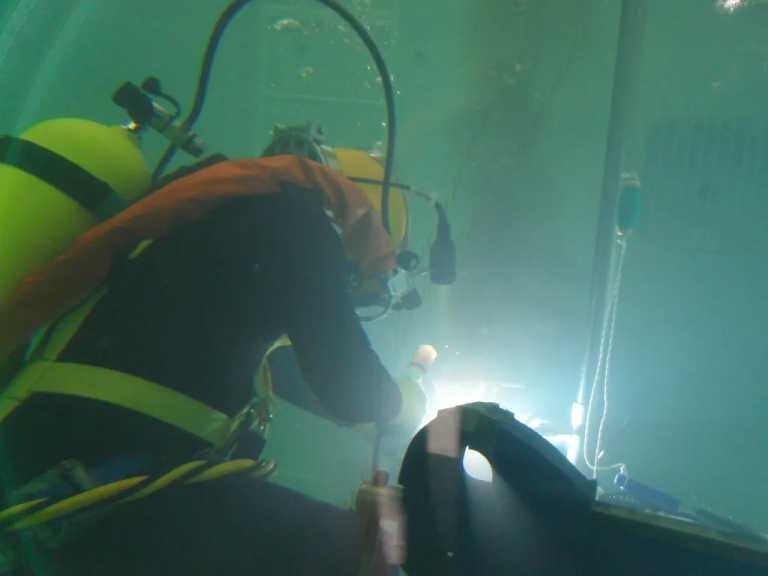
The professional inspection teams use a systematic approach to facilitate the provision of correct results without compromising on safety.
1. Preliminary Underwater Inspection
Prior to measurements, divers perform a thorough Underwater Rudder Inspection in order to check:
- Rudder condition
- Pintles
- Bearings
- Rudder stock
- Welds
- Protective coatings
- Marine growth
This is a visual examination, which determines any apparent structural issues that might need further examination.
2. Cleaning the Measurement Area
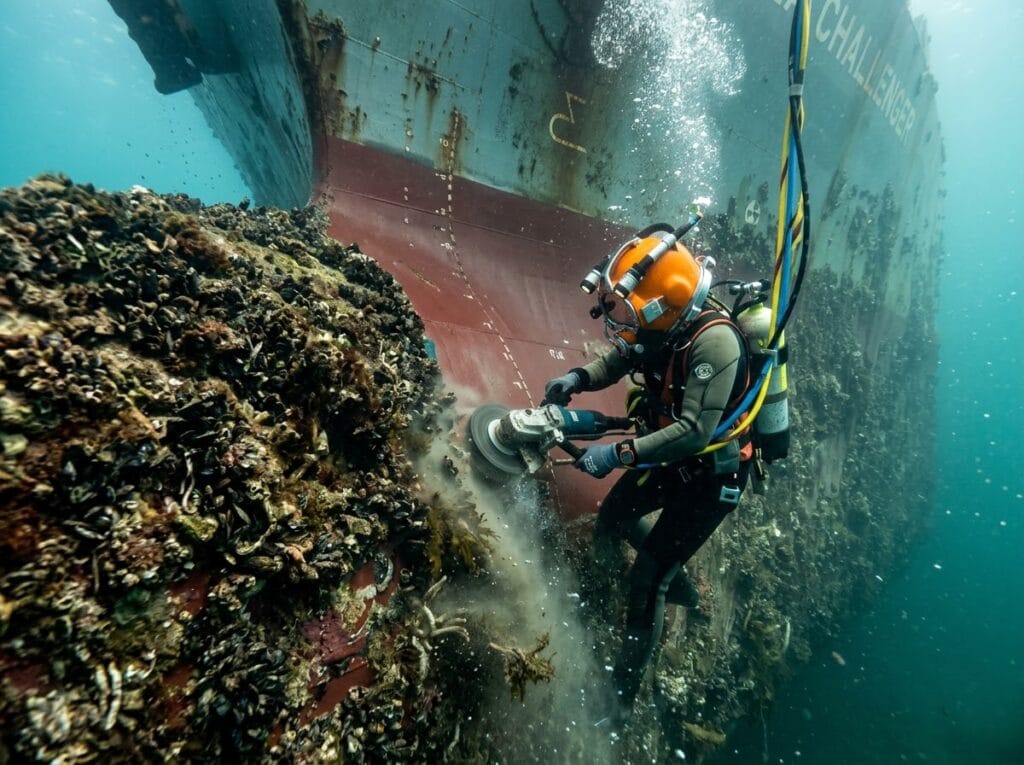
Critical contact surfaces are cleared of marine growth, sediment, and debris to provide accurate measurements and a clear view of the inspection spots.
3. Precision Clearance Measurement
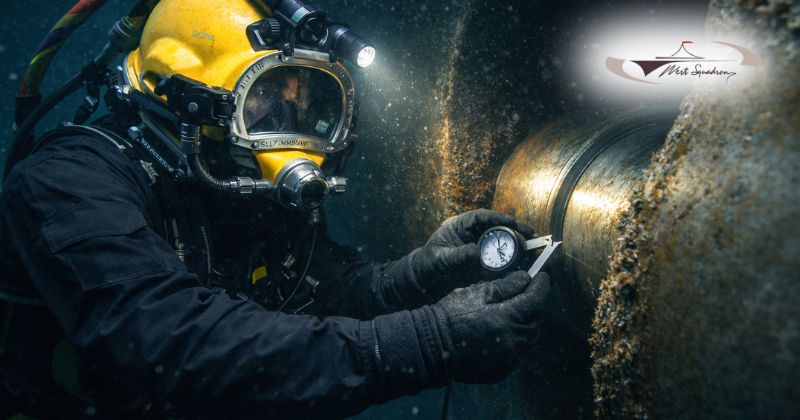
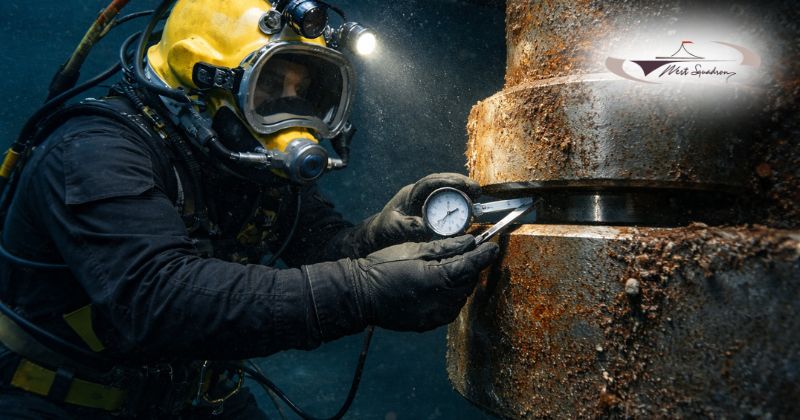
The distance between the rudder pintles and the bearings is measured using calibrated gauges, dial indicators, hydraulic measurement systems, or special underwater instruments by certified commercial divers.
Precise Rudder Bearing Clearance Measurement presents useful information in the assessment of wear and tear patterns and future maintenance needs assessment.
4. Reporting and Condition Assessment
The results of inspections are captured using measurement records, underwater photos, videos, and engineering observations. These reports assist the vessel owners to prove that they are in compliance as required by the classification society and aid in the long term maintenance planning.
Benefits of In-Water Rudder Clearance Measurements
Avoid Unnecessary Dry Docking
The contemporary In-Water Rudder Inspection Services enable measurements to be done when the vessels are in the water to minimise disruption in operations and minimise maintenance costs.
Improve Steering Reliability
Regular checks can assist in maintaining steering components to work within reasonable limits, preventing unpredictable failures.
Support Predictive Maintenance
Trends of measurement that are obtained after a series of inspections allow operators to track the wear progress and arrange maintenance according to the actual state of equipment instead of schedules.
Extend Equipment Life
Early detection of excessive wear prevents secondary damage to bearings, pintles, rudder stocks, and supporting structures.
Best Practices for Accurate Measurements
Marine operators ought to embrace a number of best practices to ensure that they are able to obtain credible inspection outcomes.
Schedule Routine Inspections
The inspection intervals must take into account:
- Vessel age
- Trading routes
- Steering system workload
- Classification society requirements
- Previous measurement history
Regular checks can be used to determine long-term wear patterns.
Use Certified Commercial Divers
Skilled commercial divers have the technical skills necessary to make precise measurements underwater and to operate in a safe manner around vital steering mechanisms.
Combine Measurements with Steering System Inspections
A full Steering System Inspection must include a check of:
- Rudder bearings
- Pintles
- Rudder stock
- Steering gear connections
- Hull attachment points
- Structural welds
The steering system health is well understood by combining various inspection activities.
Emerging Technologies in Underwater Rudder Inspections
Inspection accuracy and efficiency are still enhanced by technological developments.
Increasingly popular with modern inspection programs are:
- Electronic underwater measurement systems.
- High-definition underwater imaging
- Remotely operated vehicles (ROVs).
- 3D condition mapping
- AI-assisted defect analysis
- Digital inspection reporting
Such innovations offer more precise condition measurements in relation to upholding predictive maintenance plans.
Frequently Asked Questions (FAQs)
Q1. What is the underwater rudder pintle clearance?
Ans: They are accurate underwater inspections that gauge the clearance between rudders, ponticles, and bearings to check the amount of wear and check the health of the steering mechanism.
Q2. Why are rudder clearance measurements important?
Ans: They assist in detecting wear on bearings, excess movement, and structural degradation before these problems impact steering operation or necessitate extensive repairs.
Q3. Is it possible to measure rudder clearance without dry docking?
Ans: Yes. Underwater measurements are undertaken by certified commercial divers using special underwater measuring tools during the time the vessel is still afloat.
Q4. What are the intervals of rudder clearances?
Ans: The rate of inspection varies according to the type of vessel, conditions of operation, classification society stipulations, and past measurements. Regular checkups should be considered as a preventive maintenance measure.
Q5. What are the tools used when performing rudder inspections under the water?
Ans: To achieve proper measurements, commercial divers usually employ calibrated gauges, dial indicators, hydraulic measuring equipment, underwater cameras, and digital reporting systems.
Conclusion
A steering system is vital in the safe running of a ship and therefore must be properly maintained and reliable. Shipowners can establish the wearing condition of the Underwater Rudder by including Underwater Rudder pintle clearance measurements as part of preventive maintenance programs and identify wear before it impacts maneuverability or structural integrity. Together with the practice of professional underwater inspections, certified professional diving skills, and the latest measurement systems, the system of regular clearance inspection minimizes the costs of maintenance, the span of equipment, minimizes downtime, and guarantees the long-term adherence to international maritime standards.