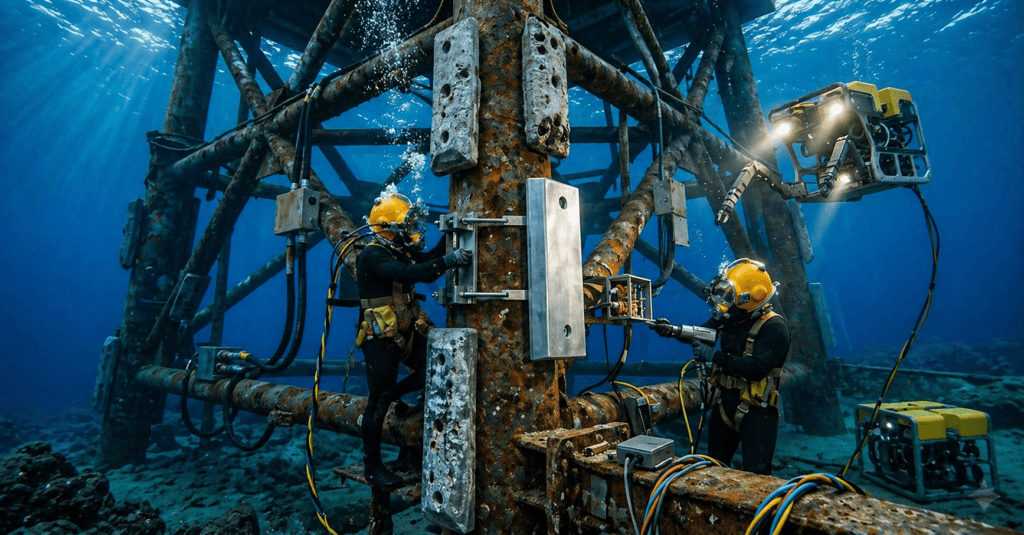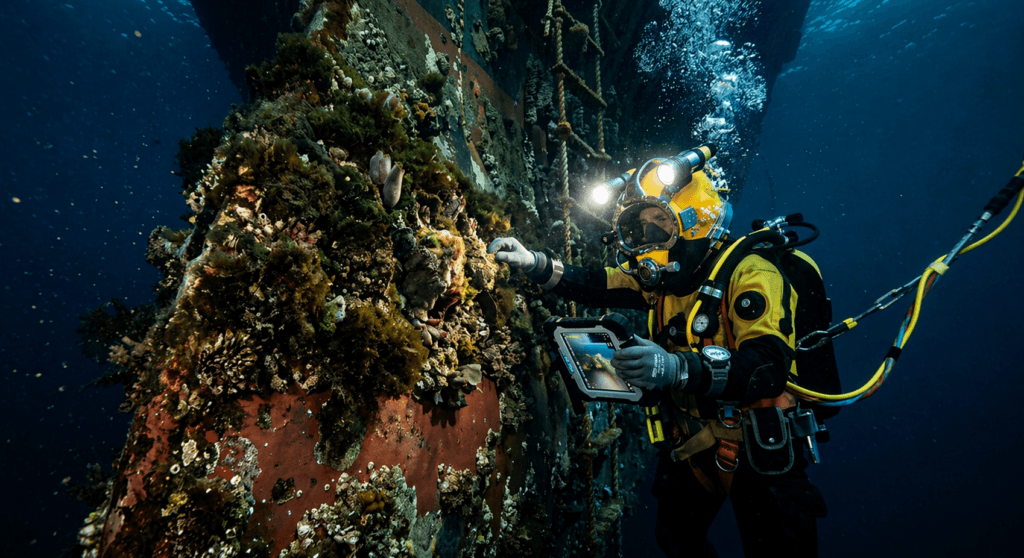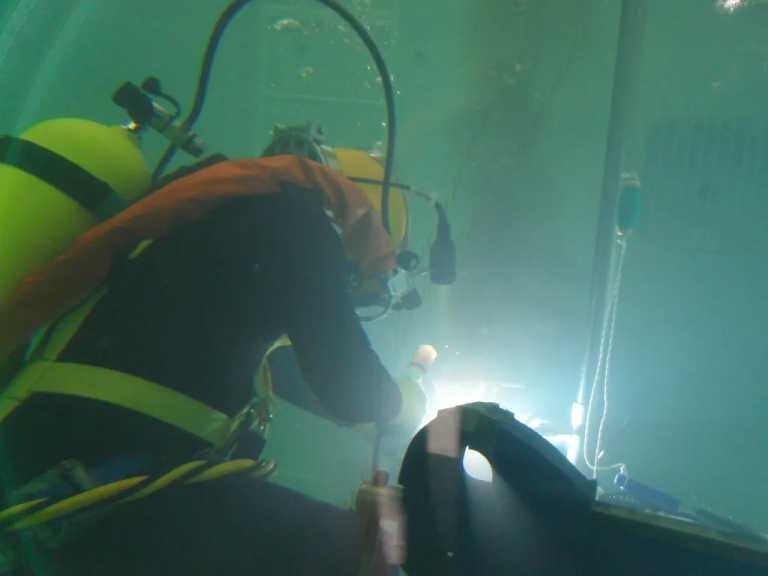
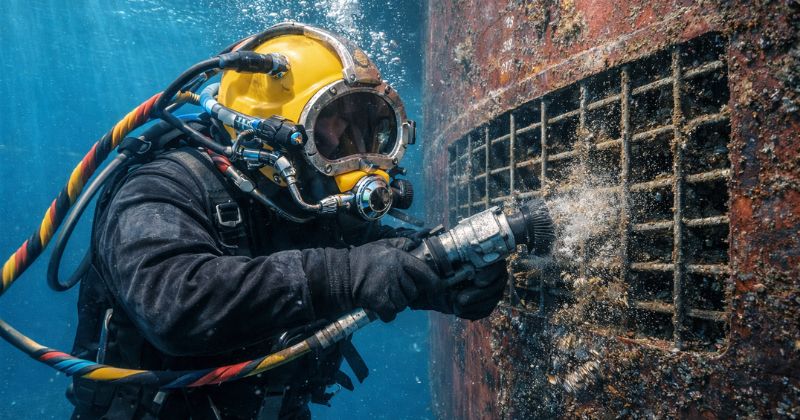
Smooth seawater uptake is crucial to the safe and dependable functioning of all commercial vessels. Sea chests are vital in the provision of seawater to cooling systems, ballast pumps, and fire protection systems, among other onboard equipment. Marine growth, sedimentation, and debris are, however, very susceptible to sea chests since they are submerged during the operation of a vessel.
Regular Underwater Sea chest cleaning maintains free-flowing water, secures important machinery, and minimizes the chances of unforeseen equipment failures. Under new methods of underwater maintenance and with certified commercial divers and new technology of inspection, vessel operators are able to clean and inspect sea chests without dry docking, reducing downtime and operating expenses.
What Is a Sea Chest and Why Does It Matter?
A sea chest is a closed space installed in the hull of a vessel that permits the entry of seawater into internal piping systems. It provides water to a number of critical onboard tasks, such as:
- Engine cooling systems
- Ballast water systems
- Firefighting equipment
- Auxiliary machinery cooling
- HVAC seawater circuits
The marine growth or debris partially blocks the sea chest, which slows down the flow of water, further straining pumps and cooling systems. In the long run, it may result in overheating, high fuel usage, and expensive repairs.
Common Causes of Sea Chest Blockages
There are a number of causes of limited seawater flow.
Marine Biofouling
Among the most prevalent reasons is the Marine Biofouling Removal requirements. Intake grates and internal surfaces are covered with barnacles, mussels, algae, and other marine life that slowly slow down water flow.
Biofouling can have a great impact on cooling efficiency and the overall performance of the vessel without regular cleaning.
Sediment and Debris Accumulation
Ships working in ports, rivers, or coastal waters tend to accumulate sand, silt, shells, plastic debris, and organic matter within sea chests. These deposits limit the intake capacities and can even destroy pumps when uncontrolled.
Corrosion and Scale Formation
Ongoing experience of seawater may hasten corrosion and mineral deposition in the intake structures, particularly on an aging vessel or ship that sails in a rough marine environment.
Benefits of Routine Sea Chest Cleaning
There are a number of benefits to having a preventive maintenance program.
Improved Cooling System Performance
Clean intake passages will provide a uniform flow of seawater to the cooling systems so that the cooling system may perform efficiently even on challenging voyages.
Better Fuel Efficiency
The effective cooling lowers the engine load and aids in the optimal combustion, contributing to the reduction of the fuel consumption and operating costs.
Reduced Risk of Equipment Failure
By eliminating marine growth and debris, the risk of pump damage, overheating, and unplanned maintenance is reduced.
Longer Equipment Lifespan
Proper circulation of seawater can be used to increase the life of heat exchangers, pumps, valves, and other auxiliary equipment.
Modern Techniques Used for Sea Chest Maintenance
Professional Sea Chest Cleaning Services
Vessels are still afloat, and special Sea Chest Cleaning Services are offered by experienced commercial diving teams. The approved non-destructive cleaning methods employed by Divers to safely remove marine growth, sediment, and debris ensure that hull coatings and intake components are not damaged.
This method does not require unwarranted dry docking but rather normal seawater flow is restored.
Inspection Before and After Cleaning
Professional Sea Chest Inspection Services may also be performed during pre-cleaning and after cleaning in order to check the internal state of the sea chest.
Underwater cameras, borescopes, and remotely operated vehicles (ROVs) with high definition aid in the inspection of:
- Corrosion
- Coating damage
- Marine growth
- Structural defects
- Intake blockages
Comprehensive inspection reports can help the vessel operators prepare for future maintenance and prove that they are compliant with the regulations.
Best Practices for Effective Sea Chest Maintenance
Establish a Preventive Maintenance Schedule
The inspection and cleaning intervals ought to be determined by:
- Vessel operating routes
- Water temperature
- Biofouling levels
- Port conditions
- Manufacturer recommendations
- Classification society requirements
Regular services minimize the chances of emergency repairs and expensive operational breakdowns.
Integrate Sea Chest Cleaning with Underwater Maintenance
The best servicing of Sea chests occurs when carried out as part of a larger Underwater Vessel Maintenance operation, which includes:
- Hull inspections
- Propeller cleaning
- Rudder inspections
- Hull cleaning
- Anode replacement
The integration of several underwater services reduces the downtime of the vessels as well as enhancing the efficiency of the maintenance.
Use Environmentally Responsible Cleaning Methods
Professional contractors make use of approved equipment and processes that eliminate marine growth without ruining protective finishes or depositing toxic substances into the marine environment.
Why Seawater Intake Cleaning Is Essential
Frequent Seawater Intake Cleaning is used to ensure the free flow of water to essential onboard systems. Clean intake passages facilitate the reliability of the engine used in the vessel, minimize energy consumption, and assist in meeting the environmental and operational requirements.
To the commercial shipping companies, offshore operators, and fleet managers, proactive maintenance of the seawater intake system is an economical way of ensuring that the vessel availability and its long-term performance are enhanced.
Questions and Answers (FAQs)
Q1. What is underwater sea chest cleaning?
Ans: It involves taking away marine growth, sediment, debris, and other obstructions of a vessel in its sea chest when the ship is afloat, maintaining the flow of seawater efficiently to ship systems.
Q2. Why is sea chest cleaning important?
Ans: Frequent cleaning ensures that the intake is not blocked, the cooling system will work effectively, use less fuel, and decrease the probability of equipment failure.
Q3. How frequently ought a sea chest to be cleaned?
Ans: The frequency of cleaning varies based on the conditions of operations, the type of vessels, the route being travelled, and biofouling. Regular checks can be used to decide on the schedule of maintenance.
Q4. Is it possible to clean sea chests without dry docking?
Ans: Yes. Underwater cleaning and inspection can be done when the vessel is still in operation by certified commercial divers and with the use of modern underwater inspection technologies.
Q5. What are the symptoms of a blocked sea chest?
Ans: Typical symptoms are inefficiency in cooling, engine overheating, poor pump performance, limited seawater flow, and high fuel consumption.
Conclusion
Keeping seawater intake systems clean is a vital aspect of vessel safety, reliability, and efficiency in the long term. Professional cleaning services, regular inspection, and preventive maintenance can help operators avoid expensive blockages, as well as enhance the work of equipment; therefore should be incorporated into a vessel management program. Underwater Sea chest cleaning can not only recover the best seawater flow but also contributes to fuel efficiency, reduces downtime, and prolong the life of vital onboard systems that are vital. With contemporary shipping adopting the value of operational excellence and sustainability, proactive sea chest maintenance continues to be a major investment in sound maritime operations.
Underwater sea chest cleaning — scope, method, timing
Blocked sea chests reduce cooling water flow, damage pumps and can force unscheduled drydock. West Squadron’s in-water sea chest cleaning in Singapore is a fast, low-cost preventive service delivered at every anchorage. Removes marine growth, mud, silt and mussel colonisation from sea chest gratings and internal chambers.