
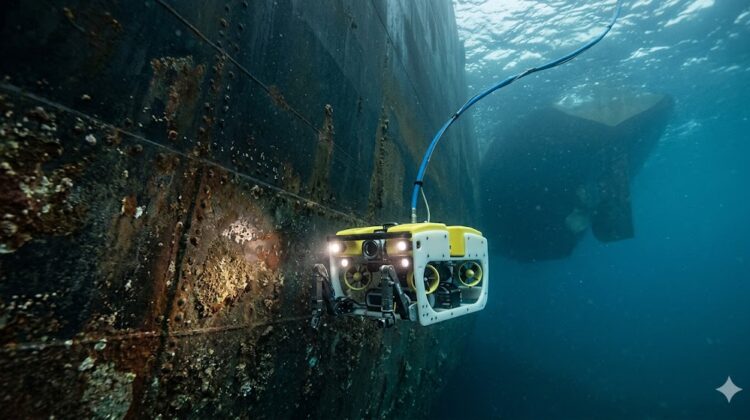
ROV Hull Inspection: Professional Robotic Inspection Services for Commercial Ships and Offshore Marine Assets
The maritime industry is heavily dependent on regular underwater inspections to maintain the safety, efficiency, and adherence of vessels to the international regulations. Hull structures are constantly subjected to corrosion, marine growth, impact damage, coating deterioration, and structural wear, which may impact the performance of the operation and raise the cost of maintenance. These inspections were traditionally done by commercial divers or dry docking, but with the introduction of robotic technology, the inspection process has been revolutionized.
ROV Hull Inspection offers a safe, precise, and economical method of assessing underwater hull conditions without the disruption of the operations of vessels. Remotely operated vehicles (ROVs) equipped with high-definition cameras, sonar systems, sensors, and high-quality navigation technology help marine surveyors to survey hard-to-reach underwater locations with reduced operational risks. This guide provides details on how robotic inspections occur, their advantages, their use in the industry, and considerations to ensure the maintenance of commercial ships and offshore marine assets.
What Is ROV Hull Inspection?
ROV Hull Inspection is a marine survey that is conducted underwater by a remotely controlled vehicle that has cameras, light systems, laser measuring devices, and sonar. The ROV is remotely operated and provides real-time visual information and inspection images as it traverses the underwater structures of the ship.
Robotic systems are able to reach inaccessible or dangerous places, which traditional methods cannot reach, including:
- Ship hulls
- Sea chests
- Rudders
- Propellers
- Thrusters
- Offshore platforms
- Mooring systems
- Subsea structures
The obtained information allows the marine surveyors and engineers to assess the integrity of the structure and determine the maintenance needs before severe issues emerge.
Why Hull Inspections Are Essential
Constant exposure to seawater causes conditions that promote decay. Regular checks can be used to detect flaws at an early stage of operation, avoiding costly repairs and unplanned malfunctions.
Professional Robotic Hull Inspection services help detect:
- Corrosion
- Marine growth
- Coating damage
- Structural cracks
- Weld defects
- Impact damage
- Cavitation erosion
- Biofouling accumulation
It enables early identification enabling shipowners to plan their maintenance ahead to minimize downtime and enhance the long-term performance of their assets.
How ROV Underwater Inspection Works
Contemporary ROV Underwater Inspection is performed in a systematic inspection procedure, which is intended to yield precise and repeatable results.
1. Inspection Planning
At the time of deployment, engineers are going through:
- Vessel drawings
- Inspection objectives
- Previous survey reports
- Classification requirements
- Environmental conditions
With proper planning, all critical underwater components will be covered.
2. ROV Deployment
The remotely operated vehicle will be deployed by the vessel or a support boat and operated around the underwater structure, with the live video being relayed to the surface operators.
Combined cameras, sonar, and laser measurement devices can record the inspection data in detail, even in low visibility conditions.
3. Detailed Structural Assessment
The operators check such critical areas as:
- Hull plating
- Sea chests
- Bilge keels
- Rudders
- Propellers
- Thrusters
- Weld seams
- Sacrificial anodes
To document the state of each component, measurements, photographs, and videos are taken.
4. Inspection Reporting
After the completion, the inspection specialists make detailed reports which include:
- High-resolution images
- Video recordings
- Defect locations
- Structural observations
- Maintenance recommendations
- Digital condition mapping
These reports aid planning, maintenance, and regulation.
Benefits of In-Water Hull Inspections
Professional In-Water Hull Inspection has great operational benefits.
Reduced Downtime
A majority of the inspections may be done when vessels are still afloat, which removes the need to dry dock the vessels, and ships are able to stick to their operating schedules.
Improved Safety
ROV minimizes the exposure of divers to dangerous underwater conditions with a consistent quality of inspection.
Cost Savings
Timely identification of corrosion, coating crack, or structural damages minimizes the cost of repair as well as helps in avoiding significant failures.
Better Maintenance Planning
Detailed inspection reports also make it possible to do condition-based maintenance so that repairs can be scheduled based on the actual state of the equipment, not based on a predefined schedule.
Applications of Marine Hull Inspection Services
The marine hull inspection services are also provided in a diverse range of industries.
Commercial shipping
Container vessels
Oil and gas platforms.
Offshore wind farms
Ports and terminals
Naval vessels
Passenger ferries
Floating production facilities
These tests assist operators in ensuring safety, efficiency, and compliance in the lifecycle of the assets.
Best Practices for Effective Hull Inspections
Vessel owners ought to consider a number of best practices in order to maximize the quality of the inspections.
Schedule Routine Inspections
Inspection frequency should be based on:
- Vessel age
- Operating routes
- Hull coating condition
- Environmental exposure
- Classification society requirements
Regular checks minimize the chances of unforeseen structural malfunctions.
Combine Inspection with Preventive Maintenance
Professional Underwater Hull Inspection Services tend to be along with:
- Hull cleaning
- Propeller inspections
- Sea chest inspections
- Cathodic protection assessments
- Thickness measurements
- Biofouling evaluations
This combined method enhances efficiency in maintenance and minimizing the overall cost of operation.
Choose Experienced Inspection Providers
The involvement of skilled ROV operators and professional marine inspection experts will guarantee that the data collected is accurate, the data is reliable in terms of reporting, and that the data adheres to the international industry standards.
Emerging Technologies in Robotic Marine Inspection
Underwater inspection is still being enhanced in terms of technology.
The inspection programs are getting more and more modernized and include:
- AI-assisted defect recognition
- 3D underwater mapping
- High-definition video analytics
- Digital twin technology
- Autonomous inspection systems
- Cloud-based inspection reporting
Such improvements offer quicker inspections, higher accuracy and more efficient long term management of assets.
Frequently Asked Questions (FAQs)
Q1. What is an ROV hull inspection?
Ans: It is an under water inspection done through a remotely operated vehicle that has cameras and sensors to assess the integrity of the hull and under water structures of a vessel.
Q2. Will robotic inspections put commercial divers out of business?
Ans: ROVs offer an effective substitute for many routine visual inspections. Nevertheless, commercial divers are still needed to perform repairs and maintenance under the water, and a physical intervention.
Q3. What are the defects that can be identified by an ROV?
Ans: ROVs are capable of detecting corrosion, underwater growth, coating damage, structural cracks, and weld flaws, impact damage, cavitation erosion, and other underwater anomalies.
Q4. Is it possible to do inspections without dry docking?
Ans: Yes. The majority of robotic inspections are conducted when vessels are afloat and hence they do not consume much time, which is used during operation, and also, maintenance is minimal.
Q5. Why are routine hull inspections important?
Ans: Periodic checks enhance the safety of vessels, optimize the maintenance schedule, increase the life cycle of assets, minimize the costs of repair, and aid in maintaining the requirements of the classification society.
Conclusion
The structural integrity of the underwater structures is critical for safe, efficient, and reliable marine operations. ROV Hull Inspection offers a complete digital reporting system, combined with high-tech robotic technology and trained inspection experts to help shipowners and offshore operators to identify the status of their vessels without disruption to their activities. With the maritime industry adopting digital transformation, robotic hull inspections are increasingly becoming an essential component of predictive maintenance plans, enabling operators to enhance safety, minimize downtime, increase asset life, and optimize operations.
